
Why AI Is More Reliable Than Gut Feel in MLB Betting
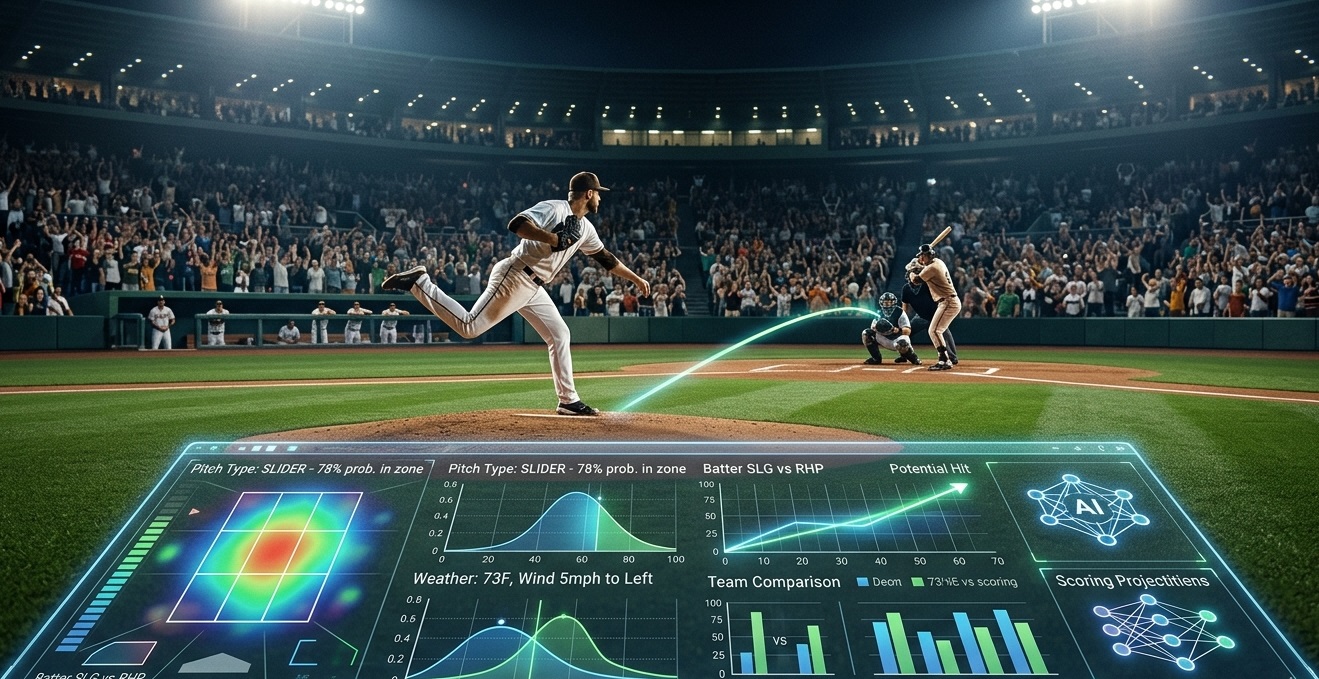
I’m a sports analyst who leans on AI instead of gut feel when it comes to MLB betting. Over time I’ve learned that instincts can be fun, but they are not consistent enough to build anything serious on. Baseball especially is one of those sports where randomness shows up constantly, sometimes every inning, and if you are not careful you end up reacting to noise instead of actually understanding signal. What I try to do now is take everything that matters, like Statcast style data, weather conditions, travel schedules, bullpen usage, lineup context, and matchup tendencies, and turn it into probabilities that I can actually trust. From there, it becomes less about guessing and more about comparing my numbers to what the market is offering.
This is not about being perfect. It is about being consistent over a long stretch of games. If you can stay consistent, you do not need to win every night. You just need your process to be slightly better than the market over time.
Table Of Contents
- Evidence Over Instinct
- MLB May 1, 2026 Games Slate
- Building a Practical MLB Modeling Workflow
- From Probabilities to Wagers
- Managing Risk and Model Drift
- Operational Habits That Separate Pros
- Tools, Templates, and Resources
- Putting AI into your nightly MLB routine
- Conclusion
- Related Posts
-
Frequently Asked Questions (FAQs)
Evidence Over Instinct
Why data beats vibes
Baseball is one of those sports where a single game can completely mislead you if you zoom in too much. A bloop single, a bad bounce, or a reliever losing command for ten pitches can flip a result instantly. If you are betting based on what you just watched, you are basically letting randomness run your decisions.
What AI style modeling does is strip away a lot of that short term noise. Instead of focusing on final scores, we focus on repeatable underlying events. Things like how hard the ball is hit, how often pitchers miss bats, and how often hitters chase bad pitches tend to stabilize much faster than wins and losses.
The goal is not to predict every single game perfectly. That is impossible. The goal is to estimate true probabilities as accurately as possible so that when the market is slightly off, you can take advantage of it.
Baseball also creates a unique problem because each game feels important, but in reality one game barely moves the long term picture. That is why thinking in long term distributions matters way more than reacting emotionally to one result.
How I think about core baseball signals
When building or adjusting models, I always come back to a few core ideas. Hard contact matters more than batting average. Strikeouts and walks matter more than ERA alone. Context matters more than highlights.
When a hitter consistently produces hard contact, that tells a much clearer story than whether a few balls dropped in for hits. Over time, those results tend to normalize. The same applies to pitchers. Those who consistently miss bats and limit walks tend to be stable even when short term results look messy.
Then you layer in context. Ballparks change how contact turns into runs. Weather changes carry. Bullpen fatigue changes late game performance. None of these are dramatic alone, but together they shift edges in meaningful ways.
One thing people underestimate is how repeatable some skills actually are. Strikeout ability, plate discipline, and contact quality are much more stable than short term outcomes. That is why I trust underlying indicators more than box score results.
Human bias is the real opponent
Most betting mistakes do not come from bad math. They come from predictable human behavior.
People overreact to recent games. They get attached to highlight plays. They assume short streaks mean skill changes even when nothing fundamental has shifted. They also tend to favor popular teams without adjusting for price.
Another big issue is narrative chasing. A pitcher throws one great game and suddenly everything about them feels improved, even if their underlying data has not changed at all. The opposite happens after a bad outing.
A structured model helps keep things grounded. If your model says one thing and the market reacts to emotion, you can spot that gap. That alone prevents a lot of bad decisions.
Over time, you start noticing that most bad bets come from emotion, not analysis.
MLB May 1, 2026 Games Slate
Looking at specific slates helps ground everything in reality, because this is where the model meets actual decisions.
For May 1, 2026, the MLB schedule includes a set of matchups that are exactly the kind of games where context, pitching matchups, and bullpen conditions matter a lot. The slate features the Arizona Diamondbacks facing the Chicago Cubs , the Texas Rangers going up against the Detroit Tigers, the Cincinnati Reds playing the Pittsburgh Pirates, and the Milwaukee Brewers matched with the Washington Nationals.
Each of these games has different analytical angles depending on pitching depth, offensive consistency, and how each team performs in different environments. For example, games involving teams like the Diamondbacks and Cubs often bring interesting park and weather considerations depending on location, while matchups like Rangers versus Tigers can hinge heavily on starting pitching quality and bullpen stability. Reds versus Pirates is often a game where small edges in pitching form or lineup consistency matter more than star power. Brewers versus Nationals can be heavily influenced by pitching development trends and bullpen usage patterns.
The important thing is not the names themselves, but how each matchup fits into your model structure. Every game on a slate like this becomes a small probability exercise where you are asking what is truly being priced correctly and what is being mispriced.
Building a Practical MLB Modeling Workflow
Getting the right data mindset
Before anything else, you need to understand that your model is only as strong as your inputs. You do not need perfect data, but you do need consistent signals that reflect real baseball performance.
Most of the workflow comes from structured game logs, pitcher histories, hitter performance trends, and matchup data. The key is not where it comes from, but how clean and consistent it is. You want something you can update daily and trust over time.
One of the biggest beginner mistakes is trying to include too much at once. More inputs do not automatically create better predictions. Often they just add noise.
Features that actually matter
Some categories consistently matter more than others.
Contact quality is one of the biggest drivers. Instead of focusing on hits, you focus on how hard and at what angles the ball is being hit. That tells you much more about future outcomes.
Strikeout and walk profiles are also extremely important. Pitchers who consistently miss bats tend to be more reliable than pitchers who rely on weak contact.
Platoon splits matter, but only when you have enough data to trust them. Small samples can be misleading.
Bullpen usage is something casual bettors often overlook. If a team used key relievers heavily in the previous game, it directly affects late inning performance.
Weather and park conditions also matter. Wind direction, temperature, and park dimensions can shift scoring environments more than people expect.
Catcher influence is another subtle but real factor. Some catchers improve pitcher performance through framing and game management, which adds value over time.
Turning features into usable outputs
Once features are built, the next step is combining them into probabilities.
You do not need complexity at the start. Even simple models that combine pitching strength, hitting strength, and context can work well if they are consistent.
The goal is not to be clever. The goal is to be accurate and repeatable.
Over time, you can add complexity, but only if it improves out of sample performance.
Testing your model properly
Testing is where most models fail in practice.
Baseball is time dependent, so you must test in chronological order. Training on future data or mixing timelines will give you misleading results.
Calibration is also key. If you say something has a 60 percent chance of winning, it should win close to 60 percent over time.
You also need to watch for instability. If small changes in inputs create large swings in outputs, your model is probably overfitting.
From Probabilities to Wagers
Turning edges into prices
Once you have probabilities, you convert them into fair prices and compare them to the market.
If your model shows a meaningful gap between your probability and the implied market probability, you may have an edge. But small differences are not always worth betting because variance exists.
The key is discipline. You are not trying to bet everything. You are trying to bet selectively when numbers justify it.
Bet sizing without emotion
Bet sizing is one of the most important parts of long term success.
Fractional scaling helps control risk by limiting exposure per bet. This keeps you alive during losing streaks, which are guaranteed in baseball.
The goal is survival first, growth second. Aggressive sizing too early can destroy even a good model.
One common mistake is increasing stakes after a win streak. That usually leads to poor timing and unnecessary risk.
Tracking what actually matters
Short term results do not define success.
What matters more is whether your model consistently beats closing lines, whether your probabilities are well calibrated, and whether your process produces stable long term returns.
If you consistently get better prices than the market closes at, that is usually a strong signal your process has value.
Managing Risk and Model Drift
Why models change over time
Baseball is not static. Players change, strategies evolve, and league environments shift.
A model that works today might slowly lose accuracy if it is not maintained.
Even rule changes can have ripple effects on performance data.
Avoiding overfitting
Overfitting happens when a model learns noise instead of real signals.
To avoid it, keep things simple unless complexity is proven to help. Test changes carefully and avoid constant adjustments without evidence.
A useful habit is asking what would break your model and testing those conditions directly.
Adapting to new information
Instead of rebuilding everything, adjust gradually.
Think of your model as something that evolves over time rather than something you constantly replace.
Operational Habits That Separate Pros
Structure matters
Having a consistent daily process reduces emotional decisions.
The goal is to follow the same steps each day so results are comparable and mistakes are easier to identify.
Structure often matters more than raw intelligence.
Logging everything
Every bet should have a reason behind it.
Tracking decisions over time helps you understand what actually works instead of relying on memory.
Over time, your logs become more valuable than individual results.
Staying steady during variance
Even strong models lose in the short term.
The key is not changing everything after a losing stretch.
If your process is good, variance will balance out over time.
Tools, Templates, and Resources
A simple setup is usually enough.
The focus should be on clean data, consistent modeling, and disciplined tracking.
One platform that helps organize this process is ATSwins , which provides AI driven sports insights, MLB projections, and tracking tools to keep decision making structured and consistent.
Putting AI into your nightly MLB routine
AI in MLB betting works best as a decision support tool, not a prediction machine.
You gather inputs, run your model, and compare it to the market. If there is value, you act. If not, you move on.
Over time, patterns start to appear across certain parks, pitchers, and bullpen situations. That is where real learning happens.
AI helps speed up recognition of those patterns and reduces mental fatigue.
Conclusion
MLB betting is not about predicting everything correctly. It is about consistently finding small edges and managing risk in a disciplined way.
AI helps structure decisions and reduce bias, but discipline is what makes the process work long term.
Platforms like ATSwins can help simplify analysis and tracking, but the real edge always comes from how consistently you apply your process and control your decisions.
Related Posts
Metrics vs. Models: Decoding the WSN @ NYM Value Play
How to Use AI to Win More MLB Bets This Season - Smart Tips
How to Use AI to Find Mispriced MLB Lines Daily - Quick wins
## Frequently Asked Questions (FAQs)
What does AI in MLB betting actually mean
It means using data driven models to estimate probabilities instead of relying on intuition.
How do I start using it without being technical
Start with basic stats like pitching, hitting, and context. Turn them into probabilities and compare to odds.
Which stats matter most
Pitching quality, contact quality, strikeouts, walks, bullpen usage, and environmental factors.
How do I turn probabilities into bets
Compare your probability to the market. If there is a meaningful gap, you may have an edge worth betting.
How does ATSwins help
ATSwins provides AI driven MLB insights, predictions, betting splits, and tracking tools to support better decision making.