
Profit From Men’s NCAA Conference Tournament Betting Angles: A Data-Driven Approach
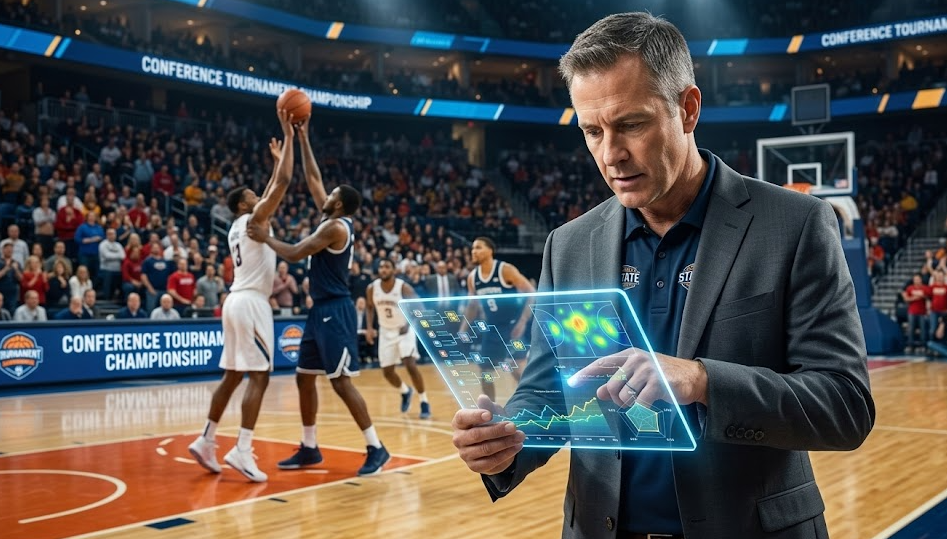
March brings chaos, and conference tournament betting rewards those who can read the bracket, understand pace, and spot price action rather than just looking at seeds. By blending AI models with matchup data, it’s possible to turn numbers into actionable plans, time entries to maximize value, and manage risk while avoiding hype-driven mistakes. In this guide, every insight is framed around men’s NCAA conference tournament betting angles, showing how careful analysis of neutral sites, schedule quirks, and statistical tendencies can produce repeatable edges. ATSwins provides a lens for understanding these patterns, giving data-driven projections and splits to complement your own work. By the end, you’ll see how preparation, timing, and disciplined execution combine to make smarter betting decisions across the full slate of conference games.
Table Of Contents
- Tournament Context and Market Flow
- Team Profiles and Matchup Edges
- Scheduling, Travel and Venue Quirks
- Numbers That Move Lines and Timing
- Process, Risk and References
- Conclusion
- Frequently Asked Questions (FAQs)
Key Takeaways
March tournaments reward reading neutral-site context, such as shooting backdrops, early tips, and tight benches. Pace and fatigue often influence totals more than sides, so tracking three-point rates, rebounding gaps, and free-throw tendencies is essential. Timing bets effectively allows you to grab early numbers for live underdogs while waiting closer to tip for favorites that have proven stability. ATSwins offers AI-driven data on predictions, player props, betting splits, and profit tracking across NFL, NBA, MLB, NHL, and NCAA, helping bettors make informed decisions. Preparation is critical: mapping bracket paths, rest days, travel, and referee tendencies, while blending season-long data with recent form, can produce simple wins. Neutral-site adjusted efficiency, turnover pressure against ball security, and second-chance points remain reliable statistics. Simple models paired with clear rules consistently outperform hunch-driven decisions in March tournaments.
Tournament Context and Market Flow
Conference tournaments vary widely in format, and understanding these differences can give an early edge. Some conferences employ double-byes for top seeds, letting them skip initial rounds, while others force higher seeds into play-in games. These structural differences affect fatigue, rotations, and game pace, which in turn impact how you should price favorites and underdogs. Teams entering with double-byes often appear rusty in the first ten minutes. Initial possessions can be slower, favoring unders in the early stages. By contrast, these teams often close strongly, with fresh legs and disciplined late-game defense favoring favorites capable of closing without fouling. Play-in winners, meanwhile, often arrive with sharper game rhythm on Day 2, particularly when facing opponents unaccustomed to the venue. Markets may initially underprice these short dogs, offering early value if the matchup aligns with schedule momentum.
To operationalize this, map the bracket and tag teams based on game count: zero, one, or two games in consecutive days. Adjust first-half efficiency for teams with byes downward slightly, but provide a subtle late-game boost if the team has depth. Play-in winners deserve a small shooting familiarity adjustment, while keeping an eye on second-half endurance if bench minutes are thin.
Neutral courts generally neutralize home-court advantage, but they are not completely immune to external factors. Proximity and fan travel can tilt a game slightly toward regionally dominant teams, particularly in Friday evening semifinals. The real swing factor often lies in shooting sightlines. Larger arenas can mute shooting variance, especially in early possessions, making unders appealing if both teams rely heavily on threes without interior scoring. ATSwins projections and splits can validate whether a team’s neutral-floor shot quality holds, allowing bettors to calibrate totals without over-penalizing pace.
For finals, the dynamics shift further. Games tend to slow, lineups shorten, and coaches rely on trusted players. Fewer bench minutes favor teams with elite minute shares and dependable creators. Totals may drift down late, offering early opportunities if neutral-site models indicate under. End-of-game free throws can provide late equity, particularly when both teams excel at drawing fouls. Weight season-long pace at around 70% and recent form at 30%, then apply a finals drag factor of one to two possessions. Prioritize top late-game free-throw teams or proven go-to scorers, while shorter rotations benefit more talented top-end units in closely contested games.
Public perception can skew totals, particularly in marquee Friday-night matchups between well-known programs. Overs are often favored due to television exposure, rivalries, and arena conditions. If both offenses are above average but rely heavily on threes, early unders can carry value, especially when the building is unfamiliar. Track first six to eight minutes of shot quality, and consider live overs only if rim pressure rises as teams adjust during the game.
Bubble teams often experience inflated lines due to perceived urgency. While the betting market may overcompensate, the underlying shot quality typically does not change dramatically within 24–48 hours. Stable opponents facing bubble teams can present value, particularly when matchups exploit defensive or turnover weaknesses. In your models, neutralize urgency bias, price the game on fundamentals, and take advantage of public overpay by acting early or buying back if the market inflates.
Closing line value generally favors favorites after semifinals. Bettors consolidate on the best team as injuries are clarified and rotations narrow. While small-dog moneyline angles remain viable in coin-flip matchups, most finals involving a one-seed see late money steam toward the favorite. Strike early when limits are reasonable, or wait for the dog in cases where brand-name bias inflates the line late.
Team Profiles and Matchup Edges
Conference tournaments often hinge on nuanced statistical matchups rather than obvious branding. Teams with high three-point attempt rates create volatility and open the door for upsets. If both teams rely heavily on threes, totals naturally expand, giving opportunities for higher-risk, higher-reward plays. Conversely, if one team attacks the paint while the other overhelps, totals compress and the favorite stabilizes. Tracking offensive and defensive three-point rates, catch-and-shoot allowances, and variance-heavy pairings is essential. Smaller underdogs with favorable matchups can be profitable moneyline stabs, particularly in quarterfinal scenarios.
Rebounding is another critical edge. Extra possessions in March can flip games. A team with top-tier offensive rebounding against an opponent with weak defensive boards can justify betting the underdog or leaning toward overs due to second-chance points and foul accumulation. Assigning one to two points for a rebounding advantage in low-tempo games, or pushing totals by a point or two when both teams crash the glass ineffectively, provides actionable insights.
Foul rates and free-throw dependence can swing outcomes. Neutral floors sometimes see stricter calls on blocks and charges, penalizing handsy defenses. Teams that generate a high free-throw rate while maintaining mediocre shooting can still produce effectively in a slow half-court setting. Incorporating late-game free-throw boosts in total models when both teams rank highly in offensive free-throw rates prevents missed opportunities and guides live fades on unders when the whistle is tight early.
Press defenses against short benches offer another angle. Back-to-back games amplify fatigue, especially on smaller rotations. Fresh first-half legs benefit press-heavy teams, while Day 3 games may see turnovers convert into runouts, yet gas tanks deplete late. Mark rotation depth carefully—if a team relies on fewer than 5.5 trusted players, flag it as press-vulnerable. Estimate two to three additional live possessions when a press meets a short bench in high-leverage matchups.
Ball-screen coverage mismatches rarely change overnight. If one team consistently ICEs side ball screens and the opponent can punish with pop bigs or skip shooters, high-value opportunities emerge. Conversely, dropping coverage against poor pull-up shooters invites unders and stabilizes favorites capable of containment without fouling. Mapping primary pick-and-roll coverage and cross-referencing opponent spacing, short-roll passing, and pull-up shot quality allows for adding two to three points to the favorite when the coverage mismatch suppresses the underdog’s primary creator.
Experience and continuity matter. Older backcourts and high lineup continuity reduce turnovers and late-game mistakes. This effect is not restricted to seniors—consistent rotations around a junior point guard can stabilize both sides and unders in tight finals. In pick’em situations, prioritize higher continuity combined with free-throw proficiency over raw athleticism or flair.
Bench minutes shrink in March, particularly in close games. Teams with two to three all-conference options benefit, while squads relying on spark plugs who need rhythm minutes may suffer. For totals, fewer bench players compress pace but can raise late-game scoring if stars draw fouls. Adjust late-game offensive efficiency upward for high-usage star teams and reduce turnover and rebounding output for depth-heavy teams reliant on bench energy.
Scheduling, Travel and Venue Quirks
The schedule plays a significant role in March tournaments. Teams playing the third game in three days often experience depleted legs, particularly mid-majors with shorter rotations. When both teams are on identical schedules, the defense-first squad with reliable rebounding tends to have an edge. If only one team faces the third consecutive game, pace typically declines for that squad, favoring unders or a half-court favorite that can grind possession by possession.
Altitude and unfamiliar sightlines also influence results. Not all venues are at sea level or resemble practice gyms. Higher elevations can sap late-game energy, while NBA arenas with deep backdrops can dampen early three-point accuracy. Adjustments should be modest, mostly affecting first halves and teams that rely heavily on catch-and-shoot threes. Early-game unders in new arenas are often a reliable edge, and live buyouts can capture adjustments if warm-ups indicate aggressive rim hunting.
Time-zone changes and travel distance matter, particularly east-to-west or vice versa. Early tips can see “body-clock unders” in the first ten to twelve minutes, with legs improving as the game progresses. This effect is smaller in power leagues using charter travel but remains a factor for mid-week play-ins. Large programs tend to handle logistics better, so flagging delta time and applying small tempo drags in first halves ensures accurate projections.
Early-tip tempo cliffs are another subtle factor. Noon or early-afternoon tips can compress the first eight minutes as coaches simplify playbooks and ride automatic sets. Slow-start teams further exacerbate these cliffs, potentially reducing total possessions by one or two, with larger impacts on Day 3 games. For refereeing, late rounds usually feature veteran crews. Games tighten, and end-of-game fouls drive scoring, so it’s worth baking in slight free-throw adjustments for physical matchups. Since fouls impact totals more than spreads late, this can guide selective under-bets when exposure is small.
Numbers That Move Lines and Timing
In March tournaments, the metrics that influence lines and totals are nuanced. Neutral-site adjusted efficiency forms the foundation, blending offensive and defensive performance while accounting for opponent quality and pace. Season-long efficiency generally drives 60–70% of your baseline, the last 10 games contribute 20–30%, and a small opponent-style factor makes up 10–15%. Using ATSwins ratings for cross-league normalization ensures your numbers reflect true expected performance rather than raw win-loss stats. Key metrics include effective field goal percentage, rim and three-point rate, defensive rebounding percentage, turnover rates, and free-throw frequency. Splits from neutral floors reveal how teams handle non-home conditions, while adjusting for opponent schedule strength avoids misleading small-sample anomalies.
Recent form is important but must be weighted carefully. Hot shooting streaks or short-term variance can be misleading, while changes due to rotation health, injuries, or scheme adjustments are meaningful. Splitting form into “process” (sustainable shot quality, turnover creation) versus “luck” (hot streaks, over- or under-shooting) allows projections to focus on repeatable factors. Process-driven metrics should carry greater weight than short-term luck when updating expected outcomes.
Injury and rotation news require constant attention. Conference weeks compress information, often delivering beat reports and shootaround notes within 90 minutes of tip. Pre-openers assume questionable starters are limited but available if they warmed in the last game. By morning, refine minutes and usage projections for uncertain players. Sixty to ninety minutes pre-tip, lock rotations, resimulate pace and efficiency, and decide whether the number remains actionable. ATSwins workflow supports this by updating player minutes and usage, recalculating expected possession outcomes, and flagging edges above 1.5 points post-vig for potential action.
Timing bets around openers and favorites is critical. Dogs are often mispriced early due to uncertainty and lower betting limits, so executing wagers shortly after openers maximizes value. Favorites benefit from higher limits and rotation confirmation closer to tip-off. Small-dog moneylines in tight, high-variance semifinals can outperform spreads if your numbers indicate a slight advantage. Keep moneyline stakes modest unless there is clear matchup leverage, typically 0.3–0.5 times your spread stake. Live entries around media-timeout runs allow confirmation of rotations, foul counts, and shot quality. Avoid chasing runs; instead, leverage live edges tied to possession efficiency.
Process, Risk and References
A structured pre-tournament sheet keeps every angle organized. Bracket paths should include likely opponents, rest days, and bye status. Team profiles track neutral-site splits, three-point rate, rim pressure, rebounding metrics, foul rates, turnover creation, continuity, and pick-and-roll coverage. Depth should note trusted minutes for the top seven players and usage concentration for the top three. Schedule flags indicate back-to-backs, third-game-in-three-day scenarios, and body-clock delta. Venue notes cover arena size, backdrop distance, altitude, and travel proximity. Market metrics record opener, projected fair line, estimated close, and target buy numbers. Reference neutral-floor performance from ATSwins, but avoid overfitting. Maintain a risk log with stake amounts and rationale codes for each entry.
Finals differ from early rounds: slower pace, concentrated rotations, and more prep work resemble a rivalry condensed into a short period. Assign higher value to trusted ball handlers who don’t foul, lineup continuity, and late-game free-throw proficiency. Adjust possession expectations lower and incorporate end-of-game foul modeling. Keep unit sizes flat or near-flat across the week to manage tournament volatility, generally around 0.75–1.25 units by edge size with per-game caps. Track ROI by league strength, bet type, and round to determine which angles produce real profit.
Leverage tools to contextualize neutral settings. ATSwins offers projections, splits, and profit tracking to validate angles and maintain discipline. When ATSwins agrees with your numbers, conviction strengthens. NCAA NET provides resume rank and predictive power context to avoid overreacting to seed chatter. KenPom efficiency ratings, particularly tempo-free and predictive splits, remain foundational, while T-Rank filters help isolate short-window performance and rotation changes. Sports-Reference logs allow verification of neutral-floor translation for pace and efficiency. Past ATSwins tournament archives reveal recurring patterns that can inform expectations.
A simple workflow can be run each day of Championship Week. Start by building lines early using ATSwins projections and neutral adjustments, pricing every game to a fair spread and total. Highlight edges of 1.5 points or more for sides, and three points or more for totals. Hit the right windows: dogs early, favorites closer to tip-off once rotations are confirmed. Track injuries and rotations, updating projections 60–90 minutes pre-tip. Prepare live triggers for totals or sides based on possession counts, shot quality, or foul environment. Maintain flat stakes, log every pregame and live entry, and debrief nightly, comparing actual pace and foul outcomes against projections.
Practical examples demonstrate these angles in action. A double-bye favorite may appear slow in the first half against a play-in winner but pull away late, creating first-half dog opportunities. Press defenses against short benches can inflate totals due to turnover-induced transition scoring, particularly on Day 3. Finals unders with end-of-game foul exposure can produce small, high-value bets when pace is slow and both teams excel at defensive rebounding but draw few fouls. Timing, context, and matchup nuance drive these micro-edges more than surface-level stats.
Blending ATSwins projections with personal calculations improves accuracy. Start with model projections and betting splits for context. Reconcile gaps by reviewing injuries, venue, and schedule fatigue. Deploy by tracking closing line value and performance, adjusting future bets based on realized results. Live betting checklists help manage positional entries, shot quality, rotations, foul trends, and press triggers. Totals often carry more edge than spreads in March, particularly for back-to-backs, new arenas, and teams relying heavily on threes or free throws. Spread versus moneyline allocation should reflect variance and matchup stability, while prop markets offer overlooked angles for star guards and rotation-dependent scoring opportunities.
Avoid common mistakes, such as overvaluing narrative-driven urgency, ignoring venue effects, chasing market steam blindly, or over-scaling units after hot days. Quick pregame routines in under seven minutes ensure thorough preparation, checking ATSwins projections, venue cues, rotation status, matchups, and public market behavior before committing. Accurate recording of results by league, round, and entry type creates a clear feedback loop for improving edge recognition. Passing on games with marginal projections or misaligned conditions protects bankroll and preserves capital for stronger opportunities. Anchoring every morning to market movement, neutral-floor consistency, and rotation updates maintains discipline and accuracy. Finally, keeping models simple—focused on efficiency, pace, and core matchup levers—ensures repeatable results. Trusted sources like ATSwins, KenPom, T-Rank, Sports-Reference, and NCAA NET provide the foundation, with a running log for validation and self-accountability.
Conclusion
March tournaments reward careful preparation, sharp timing, and disciplined execution. Reading brackets, accounting for neutral-site effects, and adjusting for fatigue allows bettors to price pace-driven totals accurately. Blending season-long data with recent form ensures your projections reflect reality, not hype, while strategic timing—early for live dogs and later for favorites—helps capture maximum value. Keeping unit sizes consistent and tracking outcomes across rounds and leagues protects your bankroll and builds confidence in repeatable edges. ATSwins reinforces this process by providing AI-powered projections, betting splits, player prop insights, and profit tracking across NFL, NBA, MLB, NHL, and NCAA games. Using data-driven tools alongside neutral-floor analysis and matchup adjustments ensures a sharper, more disciplined approach. Ultimately, success in men’s NCAA conference tournament betting comes from combining statistical rigor with situational awareness, timing, and a steady hand.
Frequently Asked Questions (FAQs)
What are men’s NCAA conference tournament betting angles, and how do I leverage them effectively?
Men’s NCAA conference tournament betting angles are repeatable, actionable insights derived from tournament-specific trends. These include neutral-court effects, early-tip pace shifts, short rotations, foul trouble patterns, and back-to-back game impacts. Leveraging them means pricing neutral sites properly, respecting fatigue from condensed schedules, modeling matchups based on rebounding and ball-screen coverage, and timing bets—dogs early when openers are soft and favorites later when limits rise. Applying these angles consistently with fair pricing gives bettors an edge over public and market-driven moves.
When is the optimal time to place bets on men’s NCAA conference tournament games?
Two windows tend to offer the best value. Early openers often misprice underdogs with favorable matchups or pace-driven advantages, providing opportunities before the market adjusts. Favorites benefit from waiting until rotation confirmations and higher limits closer to tip-off, where sharper money refines the lines. Live betting can add value if entered around media timeouts, allowing bettors to react to rotations, foul accumulation, and shot quality without chasing runs blindly.
Which statistics are most critical for identifying profitable angles in men’s NCAA conference tournament betting?
Core stats include shot quality and three-point rate, which drive volatility; defensive rebounding and second-chance points, which create hidden possessions; turnover creation versus ball security, especially for press-heavy teams; free-throw frequency and foul sensitivity, which influence late-game scoring; and tempo stability, which sets the framework for totals and spread projections. Combining these metrics with bracket paths, rotation depth, and matchups against likely opponents allows for actionable, repeatable betting angles.
How does ATSwins enhance men’s NCAA conference tournament betting strategy?
ATSwins.ai merges AI-driven predictions with practical betting tools, providing projections, player props, betting splits, and profit-tracking dashboards. This allows bettors to validate their angles, compare fair lines against market moves, and make disciplined, data-driven decisions. By pairing ATSwins insights with neutral-site adjustments, rotation analysis, and fatigue modeling, bettors can maintain consistent edges and monitor performance through a transparent feedback loop.
What bankroll and live-betting strategies help maintain consistent results during conference tournaments?
Maintaining flat unit sizes—typically 1 unit or 1–1.25 units—limits variance during congested tournament schedules. Live entries should be capped, often one per game, and triggered by predefined criteria like pace changes or early foul trouble. Avoid correlated parlays, as March tournaments concentrate risk. Track bets relative to closing lines, noting which angles are genuinely profitable. Keep detailed notes on rotation depth, fatigue patterns, venue effects, and coaching tendencies. A methodical approach, combining pregame prep, live triggers, and disciplined unit sizing, ensures tournament betting angles work in your favor over the long term.
Related Posts
AI For Sports Prediction - Bet Smarter and Win More
AI Football Betting Tools - How They Make Winning Easier
Bet Like a Pro in 2025 with Sports AI Prediction Tools
Sources
The Game Changer: How AI Is Transforming The World Of Sports Gambling
AI and the Bookie: How Artificial Intelligence is Helping Transform Sports Betting
How to Use AI for Sports Betting
Keywords:
MLB AI predictions atswins
AI MLB predictions atswins
NBA AI predictions atswins
basketball ai prediction atswins
NFL ai prediction atswins