
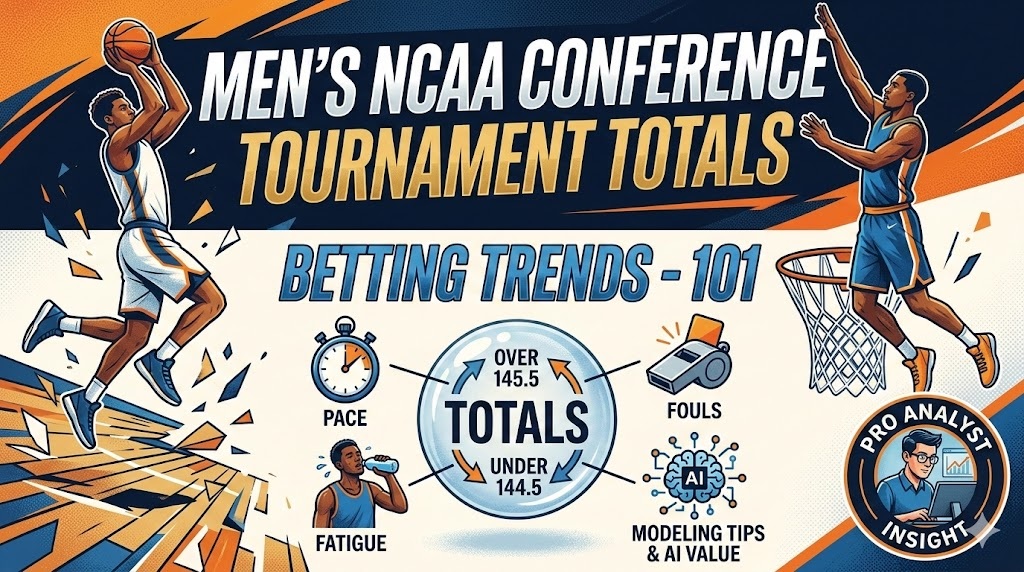
Men’s NCAA Conference Tournament Totals Betting Trends - 101
Conference tournaments change how totals move. Neutral courts, short turnarounds, and familiar opponents create quirks that most casual bettors miss, and honestly that is where a lot of the edge lives. I work as a sports analyst who leans heavily on AI models and data, but I also watch how games actually feel. Numbers matter, but context matters just as much. During conference week, the goal is not to predict perfection. The goal is to understand why totals behave differently and price those changes faster than the market can adjust. This guide explains how I approach it at ATSwins , written the same way I would explain it to a friend who wants to get smarter about college hoops betting without turning into a spreadsheet robot.
Table Of Contents
- Tournament context and why totals behave differently
- What to track and how to baseline
- Building a totals model for conference week
- Practical betting workflow and risk
- Quick conference patterns to test, not assume
- Useful resources
- A simple neutral site totals checklist
- Neutral court and back to back directional guide
- How I calibrate an AI totals model at ATSwins
- Practical examples of adjustments
- How to baseline your neutral site total in five minutes
- Workflow tips during conference week
- A compact modeling template you can copy
- Bringing it together with ATSwins tools
- Conclusion
- Frequently Asked Questions
Tournament context and why totals behave differently
Conference tournaments compress chaos into a few days. Teams that normally play twice a week suddenly play three or four times in rapid succession, often in arenas that nobody calls home. That changes rhythm immediately. College players are creatures of routine, and when routines disappear you start seeing small shifts that add up across forty minutes. Shooting depth perception changes, rotations tighten, and coaches lean harder on half court execution because elimination pressure is real.
Neutral courts are one of the biggest factors. Players are used to specific backgrounds, student sections, and familiar rims. When those disappear, early games often feel slower. Possessions become more deliberate because nobody wants to make the first mistake. I notice this especially in morning or early afternoon sessions when players are still adjusting to the building. The effect is not massive, but it is consistent enough that totals modeling needs a small efficiency adjustment early in tournament weeks.
Back to back games are another major driver. Coaches shorten benches because every possession matters. Star guards suddenly play thirty five or more minutes, and by the second day legs are not the same. Tired legs do not just reduce shooting percentages. They change decision making. Players settle for safer looks, defenses rotate a half step slower, and transition frequency drops slightly because teams conserve energy. Sometimes this leads to unders, but sometimes foul rates rise because defenders reach instead of sliding. That balance is why blindly betting unders never works.
Familiarity between conference opponents also matters more than people think. Teams know each other’s playbooks by March. That removes surprise actions and forces offenses into secondary options. When scouting is this detailed, possessions often stretch longer. You see more late clock situations and fewer easy transition threes. Efficiency variance tightens, which means totals depend more on pace and whistles than random shooting explosions.
Endgame situations become huge during conference tournaments. Close spreads lead to intentional fouling, and those final ninety seconds can swing totals dramatically. One tight game with aggressive fouling can add ten points after the outcome is basically decided. At ATSwins, modeling endgame behavior is one of the most important upgrades we make during conference week because the difference between a win and loss often comes down to how coaches manage the final minute.
What to track and how to baseline
When I start evaluating a total, I always begin with possessions. Points come from possessions, so tempo is the foundation. I look at each team’s adjusted pace over the full season and blend it with recent form. Recent games matter because rotations evolve late in the year, but season numbers keep projections stable. The trick is balancing both without overreacting to hot streaks.
Efficiency comes next. Offensive and defensive efficiency provide a cleaner read than raw scoring averages. A team that scores seventy five points in a slow game is very different from one scoring seventy five in a track meet. Blending efficiency with pace creates a realistic scoring baseline before any tournament adjustments happen.
Shot profile is where totals really start to move. Teams that rely heavily on three point attempts introduce volatility. A cold shooting stretch can kill an over instantly, while a hot stretch breaks an under even if pace stays slow. Rim attempts and free throw rates are equally important because aggressive teams generate points even when jump shots fail. During conference tournaments, whistle consistency can vary session to session, so projecting a range instead of a single foul expectation works better.
Turnovers and rebounding quietly shape totals. Live ball turnovers create easy points, while offensive rebounds extend possessions. When two strong rebounding teams meet, totals often climb simply because extra chances accumulate. These are small edges individually, but over dozens of possessions they matter more than narrative angles.
Neutral site adjustments should remain modest. I slightly lower expected shooting efficiency early in tournaments and normalize foul rates since home court whistle advantages disappear. The key word is slight. Over adjusting is one of the biggest mistakes bettors make because markets already account for neutral courts to some degree.
Fatigue variables also enter the baseline. I track minutes played the previous day and how dependent offenses are on primary ball handlers. Heavy usage guards influence pace heavily. If they look tired, offenses slow naturally. That slowdown rarely shows up in headline stats, which is why models that incorporate fatigue gain an advantage.
Building a totals model for conference week
My modeling workflow starts simple and gradually adds context. First, I collect season long metrics, recent form indicators, and shot distribution tendencies. These create a neutral expectation before tournament effects appear. After that, I adjust for opponent strength using weighted averages so weaker schedules do not inflate numbers.
Venue type matters more than people assume. Large arenas sometimes create visual depth differences that impact shooters early. Instead of guessing, I apply small priors that slightly lower early efficiency while allowing simulations to correct if scoring proves normal.
Rematch familiarity reduces volatility. When teams meet for the third time, turnovers often decline because offenses anticipate defensive schemes. I lower turnover variance slightly and increase late clock possessions in simulations. This rarely produces dramatic changes alone, but combined with fatigue it nudges totals meaningfully.
Simulating possessions is where AI becomes powerful. Each simulated possession draws from shot distributions based on offense versus defense tendencies. Outcomes include made threes, rim attempts, turnovers, and fouls leading to free throws. Running thousands of simulations produces a scoring distribution rather than a single guess, which helps identify when a betting edge truly exists.
Free throw variance and three point variance drive most totals swings. Modeling them correctly matters more than predicting exact shooting percentages. Conference tournaments amplify variance because pressure changes shot selection and foul aggression. My approach is to widen outcome ranges slightly instead of assuming stability.
Endgame logic is critical. If spreads are tight, intentional fouling probability rises sharply. If margins stretch beyond two possessions late, fouling drops off. Incorporating clock and score conditions into simulations dramatically improves totals accuracy, and it is one area where ATSwins modeling consistently finds edges.
After simulations run, projections are compared against market totals. If the difference exceeds a defined threshold and holds after accounting for betting juice, it becomes a potential play. Tracking closing line value afterward helps confirm whether the process remains sharp even during volatile stretches.
Practical betting workflow and risk
Timing matters almost as much as projections. Openers often contain softer numbers because sportsbooks post lines before full information spreads. When my model shows a strong edge early and no major injury uncertainty exists, I prefer entering quickly. Waiting sometimes means losing the best price.
Later in the market cycle, information becomes clearer but value shrinks. Injury updates, rotation news, and officiating assignments can move totals quickly. During conference week, staying disciplined matters because chasing steam rarely produces long term profit.
Bankroll management becomes essential since games occur every day. I use fractional Kelly sizing to reduce volatility. Conference tournaments create correlated outcomes, especially when betting the same teams across consecutive days. Lower exposure keeps variance manageable.
Live betting only works when structural changes occur. Fast starts alone do not justify an over if pace remains normal. I look for tactical adjustments such as zone defenses, press schemes, or foul trouble that permanently alter possession flow. Without a real change, live markets usually catch up quickly.
Logging every wager is another underrated habit. Recording projected totals, market numbers, reasoning, and closing lines reveals strengths and weaknesses over time. ATSwins tools make this easier by tracking results and performance patterns automatically, which keeps decision making honest.
Quick conference patterns to test, not assume
Every conference develops reputations, but relying blindly on them creates mistakes. Some leagues appear slower because of style, yet tournament environments can change tempo dramatically. Instead of assuming patterns, I treat them as hypotheses to test.
Physical conferences often produce lower shooting efficiency due to defensive pressure, but if officials call games tightly, free throws can push totals higher. Skill oriented conferences sometimes start tournaments cold before shooters adjust to neutral environments, then scoring rises later in the week.
Athletic leagues can create transition heavy games if whistles allow contact at the rim. Conversely, strict officiating slows pace as teams attack half court mismatches. The lesson is simple. Patterns provide direction, not certainty. Models should incorporate conference tendencies lightly and let real results guide adjustments.
Useful resources
At ATSwins, the biggest advantage is having a centralized environment where projections, betting splits, and performance tracking live together. Instead of jumping between platforms, I rely on ATSwins tools to compare model outputs with market movement and evaluate whether an edge is real or just noise. Having everything in one place saves time during busy tournament slates when decisions must happen quickly.
A simple neutral site totals checklist
Before placing any bet, I mentally walk through a checklist that ensures nothing obvious is missed. I confirm the venue type, session timing, and rest situation for both teams. I review season pace and efficiency alongside recent form while keeping adjustments small. I consider shot distribution tendencies and whether either team relies heavily on three point variance. I review turnover pressure and rebounding matchups because extra possessions quietly influence totals.
Next, I evaluate matchup familiarity and spread expectations. Tight spreads increase late foul probability, while large gaps introduce blowout risk that can slow scoring late. Officiating tendencies and travel schedules receive small adjustments rather than dramatic changes. Finally, I compare my projected total against the market and decide whether the edge justifies risk. Running through this process takes only a few minutes once practiced but prevents emotional bets.
Neutral court and back to back directional guide
Neutral courts slightly reduce early shooting comfort, especially in unfamiliar arenas, but scoring usually normalizes after teams adjust. Back to back games tend to reduce second half pace because fatigue accumulates, though increased fouling can offset the slowdown. Rematches often decrease turnover volatility since offenses recognize defensive schemes, which slightly favors lower scoring environments. Tight spreads increase late scoring through intentional fouls, while blowouts often suppress totals because benches empty and pace slows. None of these factors should dominate projections alone, but together they create meaningful directional nudges.
How I calibrate an AI totals model at ATSwins
Calibration begins with feature engineering that remains consistent across teams and conferences. Possession estimates blend both teams’ tempos and adjust toward conference averages when neutral sites introduce uncertainty. Shot quality indicators rely on accessible metrics that approximate how offenses create opportunities and how defenses respond.
Priors and shrinkage keep models grounded. Conference tendencies influence expectations slightly, but strong uncertainty prevents overconfidence. Recent performance receives weight without allowing short hot streaks to distort projections. Constraints ensure unrealistic pace jumps do not appear simply because efficiency improved against weaker opponents.
Simulation thresholds determine when bets trigger. I require edges that remain stable under multiple scenario tests, including slightly different shooting assumptions. If a projection cannot survive small stress tests, it probably lacks real value. Tracking closing line value afterward confirms whether the market eventually agrees with the projection.
Daily review completes the process. After each slate, I examine where pace or foul expectations diverged from projections and update minor priors only when consistent evidence appears. The goal is steady improvement, not constant overreaction.
Practical examples of adjustments
When both teams enter a new arena early in the day, I slightly reduce expected shooting efficiency while keeping pace unchanged. During quick turnaround semifinals, I lower second half pace expectations and slightly increase foul impact if both teams attack the rim. In rematch scenarios, I tighten turnover ranges because familiarity reduces chaos. When spreads sit near one possession and both teams draw fouls frequently, I raise endgame scoring expectations because intentional fouling becomes likely.
How to baseline your neutral site total in five minutes
Start by writing down each team’s adjusted tempo and efficiency numbers. Blend season performance with recent games while leaning more heavily on season data. Apply a small neutral site adjustment and a minor fatigue adjustment if teams played the previous day. Estimate shot mix by comparing offensive tendencies with defensive allowances. Consider foul context and spread implications before comparing your estimate with the market number. If your projection differs dramatically, revisit assumptions rather than assuming the market is wrong.
Workflow tips during conference week
I keep a running ledger of player minutes so fatigue signals become obvious. Watching how arenas play across multiple games also helps identify subtle trends. Coaching tendencies matter late in games, especially regarding intentional fouling decisions. Transparent logging of reasoning and results highlights which edges actually work over time. Conference week moves fast, so organization becomes a competitive advantage.
A compact modeling template you can copy
My template begins with team metrics including pace, efficiency, shot distribution, turnover rates, and rebounding percentages. Venue context, rest status, and spread expectations follow. Transformations blend season and recent data while applying small neutral adjustments. Simulation logic converts possessions into scoring outcomes and incorporates endgame foul behavior. Outputs include projected totals, edge estimates, and recommended stake sizing. After bets are placed, monitoring news and tracking closing line value complete the cycle.
Bringing it together with ATSwins tools
Everything connects inside ATSwins. Model projections provide baselines, betting splits show how the market reacts, and profit tracking reveals long term performance. During conference tournaments, having a single workflow prevents rushed decisions. Instead of reacting emotionally to every result, I rely on ATSwins dashboards to stay consistent and evaluate performance objectively. Over time, consistency matters more than any single prediction.
Conclusion
Conference tournament totals look chaotic from the outside, but patterns emerge when you focus on possessions, fatigue, familiarity, and whistles. Pricing those elements consistently creates edges that casual bettors overlook. The goal is not perfection. The goal is disciplined decision making supported by data and experience. With a clear process, careful bankroll management, and tools like ATSwins, conference week becomes an opportunity instead of a guessing game.
Frequently Asked Questions
Conference tournament totals trends simply describe how scoring environments shift during conference week due to neutral courts, tight schedules, and familiar opponents. Neutral courts remove routine comfort, back to back games introduce fatigue, and rematches reduce surprise plays. Tracking pace, shot mix, foul rates, and rest situations helps identify when totals may move away from regular season expectations. Timing bets depends on market conditions, with early entries offering value when edges are strong and later bets benefiting from confirmed information. ATSwins helps by combining projections, betting splits, and profit tracking so bettors can make informed decisions instead of guessing.
One thing I always remind people is that conference tournaments reward patience more than aggression. It is tempting to bet every game because the schedule feels nonstop, but edges appear unevenly. Some days produce multiple strong totals opportunities while others offer nothing worth risking money on. Learning to pass is part of becoming profitable, and it honestly took me years to accept that. During busy weeks, I schedule review time between slates so I can reset mentally instead of chasing outcomes.
Another underrated factor is emotional momentum. College teams react strongly to wins and losses because rosters are young. A team that survives an overtime thriller might play slower the next day simply because mental fatigue sets in. Coaches shorten playbooks and focus on defensive stability. That subtle shift rarely appears in statistics but shows up clearly when watching possessions unfold. Incorporating qualitative notes alongside quantitative data improves projections more than people expect.
Travel logistics also play a quiet role. Some teams arrive earlier and adjust to arenas faster, while others deal with late arrivals or tight practice windows. Even small disruptions to routine can influence shooting rhythm early in games. I treat these factors as minor nudges, never major swings, but over a large sample they help explain why certain early session games consistently land below expectations.
Another lesson from years of modeling is respecting randomness. Even the best projections lose frequently because basketball contains natural variance. Three point shooting especially introduces chaos. Accepting that variance exists prevents emotional overreactions after losses. When a bet loses despite beating the closing line, I consider it a process win. Long term success depends on consistently making good decisions rather than celebrating short term outcomes.
Conference finals deserve special attention. With extra rest and heightened stakes, teams often slow pace intentionally. Every possession feels magnified, and coaches call more set plays. That controlled environment can lower totals despite elite offenses. At the same time, if both teams rely heavily on free throws, late fouling still creates scoring bursts. Balancing those forces requires careful simulation rather than assumptions.
Finally, communication between data and intuition matters. Models highlight probabilities, but watching games reveals how those probabilities develop. When both perspectives align, confidence increases. When they disagree, I investigate further instead of forcing a bet. That balance between analytics and observation defines the philosophy behind ATSwins and keeps the process grounded.
A common question I hear is whether beginners should build complex models immediately. My honest answer is no. Start simple. Learn how pace and efficiency interact before layering advanced adjustments. Complexity without understanding leads to overfitting and frustration. As confidence grows, adding simulations and fatigue adjustments becomes easier and more meaningful.
Another frequent question involves whether overs or unders perform better during conference week. The reality is that neither side dominates consistently. Markets adapt quickly, and edges shift depending on venue, officiating, and matchups. Successful bettors focus on pricing accuracy rather than choosing a preferred direction. Some days the best value appears on unders driven by fatigue, while other days overs emerge due to foul heavy matchups.
People also ask how much time to spend preparing each game. My workflow averages fifteen to twenty minutes once systems are built. Preparation focuses on confirming assumptions rather than starting from scratch. Automation through ATSwins tools allows more time for interpretation and less time for manual calculations, which becomes crucial during busy tournament schedules.
The final takeaway is simple. Conference tournaments reward preparation, discipline, and adaptability. When bettors stay consistent and avoid emotional swings, results tend to follow over the long run. That mindset, more than any single statistic, separates sustainable success from short term luck.
Related Posts
College basketball conference tournament betting strategies - How to bet smart in March
Why a College Basketball Tournament Simulation Model Beats Bracket Gut Feelings
March Madness bracket seeding trend analysis - 7 Ways to win
Sources
The Game Changer: How AI Is Transforming The World Of Sports Gambling
AI and the Bookie: How Artificial Intelligence is Helping Transform Sports Betting
How to Use AI for Sports Betting
Keywords
men’s ncaa conference tournament bubble team betting trends
men’s ncaa conference tournament revenge game betting angle
men’s ncaa conference tournament rest vs fatigue betting angle
men’s ncaa conference tournament neutral court betting model
men’s ncaa conference tournament favorite betting angles
men’s ncaa conference tournament underdog betting strategy
men’s ncaa conference tournament totals betting trends
men’s ncaa conference tournament spread betting angles
men’s ncaa conference tournament betting strategy
men’s ncaa conference tournament prediction model
men’s college basketball conference tournament betting trends
men’s ncaa conference tournament betting angles