
Men's Ncaa Conference Tournament Revenge Game Betting Angle - How to use it
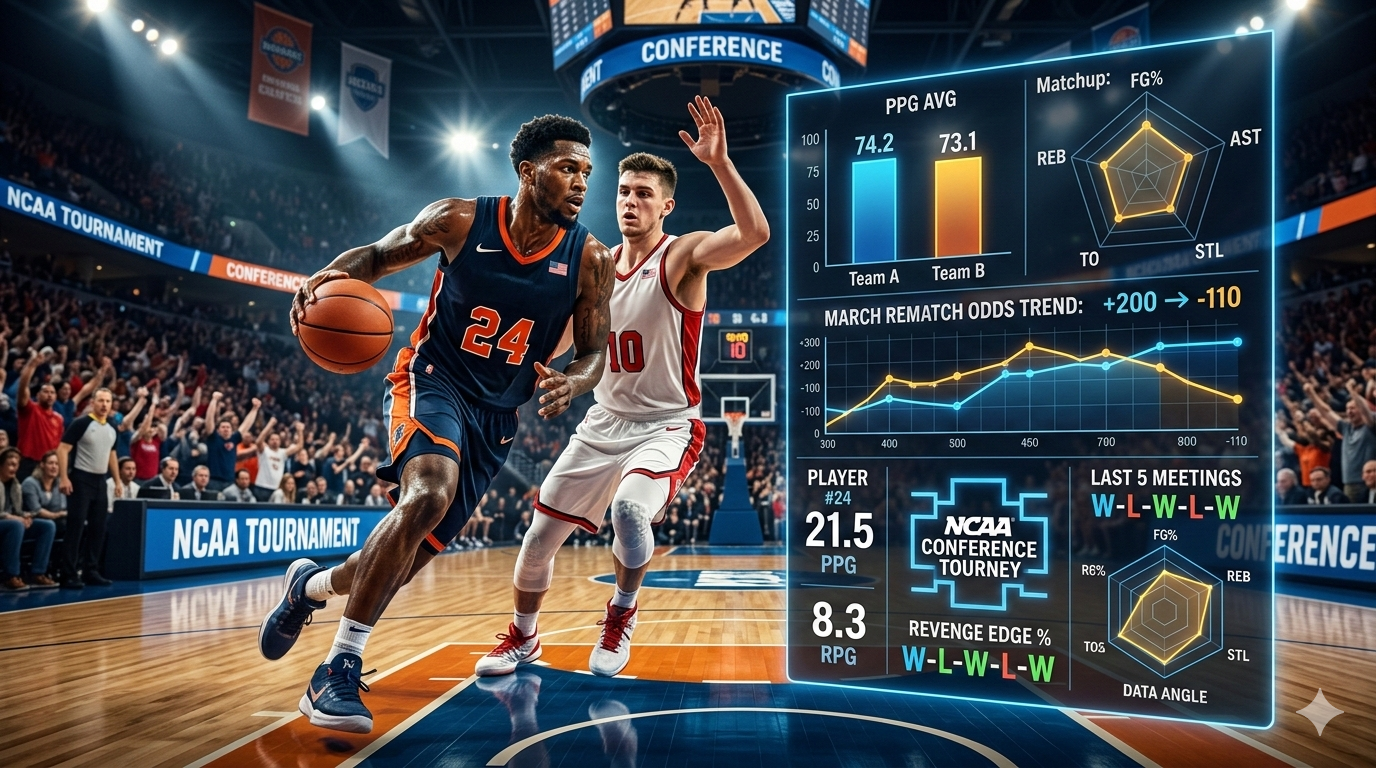
March is one of the wildest times of the year for college basketball bettors. Conference tournaments start stacking up, teams play multiple games in a few days, and you constantly see rematches from earlier in the season. One of the angles people love talking about every single year is the revenge game. The idea is simple. Team A lost to Team B earlier in the season and now they get another shot at them in the conference tournament.
It sounds powerful when you say it out loud. A team that lost earlier is going to be motivated. The players remember the loss. The coaches make adjustments. The fans love the storyline. But motivation alone does not automatically create betting value. The betting market understands these narratives, and a lot of the time the number already reflects that story.
The real question is not whether revenge exists emotionally. Of course it does. These are competitive athletes who remember losses. The real question for bettors is whether revenge actually creates a statistical edge against the spread or on the moneyline. That is where data, matchup analysis, and market awareness become way more important than just assuming motivation leads to wins.
When we look at revenge situations through the lens of AI modeling and data analysis at ATSwins , the goal is not to chase narratives. The goal is to figure out when a rematch actually changes the matchup dynamics and when it is just the same teams playing the same game again with a different storyline attached.
This guide breaks down how to evaluate revenge games during men’s NCAA conference tournaments. Instead of relying on gut feeling or social media narratives, we look at things like efficiency metrics, rest advantages, matchup edges, and market behavior. The process turns a vague betting concept into something measurable and repeatable.
Table Of Contents
- Men’s Conference Tournament Revenge: What Matters and What Doesn’t
- Defining the revenge game angle in men’s NCAA conference tournaments
- Validating the edge with data
- Tournament specific context that shifts outcomes
- Market behavior and pricing tells
- Practical workflow for bettors
- How to calibrate expectations for favorites vs underdogs
- Case style patterns to monitor
- Building this into an AI enabled workflow
- Execution details that often decide edges
- Data sources and tools that actually help
- Quick examples of applying the angle
- Common pitfalls and how to avoid them
- What to save in your database for future seasons
- A short repeatable checklist you can run each morning
- Conclusion
- Related Posts
- Frequently Asked Questions
Defining the Revenge Game Angle in Men’s NCAA Conference Tournaments
When bettors talk about revenge in college basketball, they usually mean a rematch where one team previously lost to the same opponent earlier in the season. In conference tournaments, these games often happen within a relatively short time frame. A team might lose in January or February, then see that same opponent again a few weeks later when the conference bracket lines up.
The key element is that the rematch usually happens on a neutral floor. Conference tournaments are played at centralized locations, which removes traditional home court advantages. That change alone can shift the dynamics of a matchup. Teams that relied on home crowd energy, familiar shooting backgrounds, or travel advantages suddenly have to adjust to a completely different environment.
The revenge angle also becomes interesting because coaches have more information. They already played this opponent once or twice. They have film, scouting notes, and a better understanding of what worked and what failed. A coach who watched his team get destroyed on the glass in the first matchup is going to emphasize rebounding adjustments. A team that struggled against ball pressure might change its rotation or ball handling responsibilities.
But revenge does not mean the underlying matchup changes automatically. Sometimes the first meeting revealed a real mismatch. Maybe one team simply has better athletes, more size, or better half court offense. If those structural advantages still exist, motivation alone will not erase them.
That is why revenge situations must be analyzed within the broader context of team quality and matchup dynamics. Instead of assuming the losing team will perform better, the smarter approach is to examine whether the factors that caused the first loss are actually fixable.
Validating the Edge With Data
If revenge is going to be used as a betting angle, it needs to show measurable results. The only way to verify that is by building structured datasets and comparing revenge games to similar games without that storyline.
The first step is defining the revenge cohort. That means identifying conference tournament games where a team lost to the same opponent earlier in the same season. The time window usually falls somewhere between one week and about a month and a half. Shorter gaps might still be influenced by scheduling quirks, while longer gaps reduce the emotional memory factor.
Once you have those games identified, the next step is controlling for team quality. Strong teams win more games regardless of revenge narratives. That is why analysts rely on adjusted efficiency metrics. These numbers estimate how good a team’s offense and defense are per possession while accounting for opponent strength and pace.
Using efficiency margin as a baseline rating gives you a clearer starting point. If Team A has a significantly better efficiency margin than Team B, the revenge narrative might not matter much. The stronger team is still the stronger team.
Another key step is comparing outcomes against the closing line. The closing line is one of the best indicators of market expectation because it reflects all available information and the combined opinion of bettors and sportsbooks. If revenge teams consistently outperform the closing spread, that suggests the market may be underestimating them. If they break even or underperform, the narrative is probably already priced in.
This is where tools and tracking systems become valuable. Platforms like ATSwins use AI driven models to compare projected spreads against market numbers and track performance over time. Instead of relying on one season of results, the system evaluates hundreds of games and identifies patterns that actually hold up statistically.
The goal is not to prove revenge always works. The goal is to figure out when it adds a small predictive signal on top of stronger metrics like rebounding rates, turnover percentages, and shooting efficiency.
Tournament Specific Context That Shifts Outcomes
Conference tournaments introduce several variables that do not appear as often during the regular season. These factors can significantly influence revenge games.
Neutral court shooting variance is one of the biggest changes. Players are used to practicing and competing in familiar arenas. When they move to a new venue, the shooting background changes. Depth perception can be slightly different. Some arenas have lighting or sightline quirks that affect perimeter shooting.
Early tournament games sometimes show slightly lower shooting percentages because players are adjusting to the environment. This can create volatility in games where the previous meeting was heavily influenced by three point shooting.
Short rest is another important factor. Many teams play back to back games in conference tournaments. Fatigue becomes a real issue, especially for teams with short rotations. A team seeking revenge might be motivated, but if their top players logged heavy minutes the night before, their energy level could drop late in the game.
Seeding and byes also influence outcomes. Higher seeded teams often receive automatic byes into later rounds, giving them extra rest and preparation time. Meanwhile, lower seeds may already have one or two games under their belt. That creates a strange dynamic where the rested team might start slowly while the other team is already comfortable in the arena.
Coaching adjustments can also be amplified during tournament play. Some coaches are excellent at analyzing film and implementing tactical changes. They may switch defensive coverages, alter pick and roll strategies, or change rotation patterns in response to what happened in the first matchup.
Lineup evolution is another factor bettors sometimes overlook. College teams change throughout the season. Freshmen improve. Injured players return. Coaches tighten rotations as they approach postseason play. When evaluating revenge games, it is important to compare the lineups from the first meeting to the expected rotations in the rematch.
If the losing team has a key player back or a more stable rotation, the revenge angle may be supported by real structural improvements rather than just emotional motivation.
Market Behavior and Pricing Tells
The betting market is extremely aware of revenge narratives. Public bettors love these stories because they are easy to understand. If a team lost earlier in the season, many people assume they will be extra motivated the next time around.
Because of that public perception, sportsbooks sometimes shade the opening line slightly toward the revenge side. That does not mean the line is wrong. It simply means the narrative is already part of the pricing.
One of the best ways to detect whether revenge is being overvalued is by comparing the opening line to the closing line. If the market moves strongly toward the revenge team without any injury news or matchup information, it may indicate public money pushing the narrative.
Professional bettors usually focus more on matchup edges. If a team with revenge also has advantages in rebounding, ball security, or defensive efficiency, the line movement may be justified. But if the move is purely narrative driven, experienced bettors often look for opportunities on the other side.
Tracking closing line value is another critical piece of the puzzle. Even if a single bet loses, beating the closing line consistently indicates that the underlying process is working. Over time, bettors who regularly get better numbers than the market tend to outperform those who simply follow narratives.
Practical Workflow for Bettors
A structured workflow makes revenge analysis much more efficient. Instead of randomly scanning games, bettors can follow a repeatable process each morning during conference tournament week.
The first step is identifying rematches from earlier in the season. This can usually be done by reviewing conference schedules and recent results.
Next, establish a baseline power rating using efficiency metrics. This gives you a neutral starting spread before considering situational adjustments.
Then analyze matchup factors such as rebounding rates, turnover percentages, and rim protection. These elements often explain why the first game unfolded the way it did.
Rest advantages should also be evaluated. Teams coming off a bye or a lighter schedule may have more energy late in the game.
Once those factors are accounted for, the revenge narrative can be added as a very small adjustment if it aligns with the matchup data. The key is keeping that adjustment small. In most cases, it should only shift the projected spread by a fraction of a point.
Finally, compare your projected line to the market number. If there is a meaningful difference and the matchup supports it, the game might be worth betting. If the numbers are close, it is usually better to pass rather than forcing a bet.
How to Calibrate Expectations for Favorites vs Underdogs
Revenge situations affect favorites and underdogs differently.
When a favorite seeks revenge, the market often exaggerates the storyline. If the favorite lost earlier due to unusual shooting variance or foul trouble, a small adjustment might make sense. But if the matchup issues remain, revenge alone should not justify a large upgrade.
Underdogs create a different scenario. Bettors often become excited about the idea of an upset fueled by revenge motivation. However, underdogs must still generate scoring opportunities and defend effectively. If the first matchup revealed a clear talent gap, the revenge narrative may not change much.
Games with very small spreads also behave differently. When the line is within a few points, late game variance such as fouls and free throws can dominate the outcome. In those cases, revenge motivation becomes less predictive compared to factors like coaching decisions and late game execution.
Case Style Patterns to Monitor
Certain patterns appear repeatedly in revenge rematches during conference tournaments.
One example involves foul trouble in the first meeting. If a key big man picked up early fouls and the team struggled on the boards, the rematch could look different if he stays on the floor longer.
Another pattern involves extreme shooting performances. If one team made an unusually high percentage of contested three pointers in the first game, regression toward the mean may occur in the rematch.
Turnover issues can also be adjusted through lineup changes. Coaches sometimes shift ball handling responsibilities or reduce minutes for players who struggle against defensive pressure.
The important thing is separating random variance from structural mismatches. When a loss was driven by random shooting swings, revenge plus regression can create value. When the loss came from a physical mismatch or talent gap, revenge may not matter much.
Building This Into an AI Enabled Workflow
Modern betting analysis often involves machine learning models that process large datasets and identify patterns. Revenge situations can be incorporated into these models as small features rather than dominant signals.
For example, a model might include variables such as days since the previous meeting, margin of the previous loss, and rest differences between teams. Interaction terms can capture situations where revenge coincides with rebounding advantages or turnover pressure.
At ATSwins, these features are layered on top of broader predictive models that already evaluate efficiency metrics, pace, and player availability. The revenge flag becomes just one small piece of the overall projection rather than the primary driver.
This approach keeps the model grounded in measurable performance indicators while still acknowledging that situational factors can influence outcomes.
Execution Details That Often Decide Edges
Even when the analysis is correct, execution matters. Timing bets correctly can significantly affect long term results.
If a bettor expects public money to push the line toward the revenge team, waiting closer to game time may produce a better price on the other side.
If the matchup advantages clearly favor the revenge team and the opening number is favorable, betting earlier may capture closing line value.
Live betting also provides opportunities during tournament games. Pace, foul trouble, and coaching adjustments can change quickly. A team that appears disorganized early might stabilize later once rotations settle.
The key is remaining disciplined and avoiding emotional reactions. Revenge narratives can be entertaining, but successful bettors rely on structured analysis and consistent bankroll management.
Data Sources and Tools That Actually Help
Reliable data is essential for analyzing college basketball matchups. Efficiency metrics, lineup information, and situational splits all contribute to better projections.
Many bettors use statistical databases and modeling tools to evaluate team performance. AI driven platforms like ATSwins combine these datasets with predictive algorithms to generate projections and track results.
Instead of manually analyzing every game from scratch, bettors can use these tools to identify potential edges and then apply additional contextual analysis.
The combination of automated modeling and human judgment often produces the most consistent results.
Quick Examples of Applying the Angle
Imagine a mid level conference team that lost a close road game earlier in the season while shooting poorly from three point range. In the tournament rematch on a neutral floor, the same team also has a rebounding advantage and extra rest. That combination of factors may justify a small revenge adjustment.
Now consider another scenario where a top seed lost earlier because they struggled against heavy defensive pressure. If the opposing team uses the same pressing style and the favorite still lacks reliable ball handlers, revenge motivation alone might not fix the problem.
These examples show why revenge must be evaluated alongside matchup dynamics. The storyline can highlight interesting games, but the numbers determine whether a bet actually has value.
Common Pitfalls and How to Avoid Them
One of the most common mistakes bettors make is overvaluing blowout losses. A team that lost by twenty points may appear motivated for revenge, but that margin might reflect a genuine talent gap.
Another mistake involves ignoring neutral court conditions. Shooting percentages and foul patterns can shift when teams move to unfamiliar arenas.
Double counting factors is another issue. If a team gets a key player back from injury, that improvement should be attributed to lineup strength rather than revenge motivation.
Finally, chasing line movement without understanding the reason behind it can lead to poor bets. Narrative driven steam often creates inflated prices that experienced bettors fade.
What to Save in Your Database for Future Seasons
Long term tracking helps refine revenge analysis over multiple seasons. Key information to record includes previous matchup margins, rest differences, lineup changes, and closing line data.
By reviewing this information after each tournament cycle, bettors can determine whether revenge variables actually improve model accuracy.
Over time, patterns may emerge showing that certain conferences or coaching styles respond differently to rematches.
A Short Repeatable Checklist You Can Run Each Morning
Start by identifying conference tournament rematches scheduled for the day. Then review efficiency margins and baseline power ratings for each team.
Check rest differences, lineup availability, and recent performance trends. Analyze matchup factors such as rebounding and turnover rates.
Apply a small revenge adjustment only if the matchup dynamics support it. Compare your projected spread to the market line and decide whether the difference justifies a bet.
Finally, record your projections and results so the data can be analyzed later.
Conclusion
Revenge games in conference tournaments are one of the most talked about angles in college basketball betting. The narrative is compelling because it feels intuitive. Teams that lost earlier want payback. Coaches study the previous game and make adjustments. Fans expect a different outcome.
But motivation alone rarely creates consistent betting value. The real edge comes from understanding the matchup details that actually influence scoring and efficiency. Rebounding advantages, turnover pressure, lineup stability, and rest differences usually matter more than emotional narratives.
When revenge aligns with these structural factors, it can add a small predictive signal. When it does not, it is often just a storyline that the betting market has already priced into the spread.
The best approach is to treat revenge as a minor feature within a larger analytical framework. By combining matchup analysis, market awareness, and disciplined bankroll management, bettors can separate meaningful signals from noise.
ATSwins focuses on this type of structured analysis through AI powered sports prediction models, betting insights, and performance tracking. The goal is not to chase narratives but to identify repeatable edges that hold up across hundreds of games.
In the long run, consistent processes beat emotional reactions. Revenge may grab headlines during March tournaments, but the numbers still decide where the real betting value lives.
Related Posts
ATSwins NCAA basketball insights and tournament betting analysis.
Frequently Asked Questions
What is the men’s NCAA conference tournament revenge betting angle?
A revenge situation occurs when a team faces a conference opponent in the tournament after losing to them earlier in the same season. Bettors analyze whether adjustments, lineup changes, or neutral court conditions could change the outcome of the rematch.
Does revenge actually improve a team’s performance?
Sometimes it does, but only when supported by real matchup improvements. Emotional motivation alone rarely changes statistical outcomes.
Should bettors automatically bet revenge teams?
No. Revenge should be treated as a minor situational factor rather than a primary betting signal.
When is revenge most relevant?
It becomes more relevant when the first matchup was influenced by unusual shooting variance, foul trouble, or temporary lineup issues that are unlikely to repeat.
How can ATSwins help evaluate revenge games?
ATSwins uses AI driven sports prediction models to analyze efficiency metrics, matchup data, and betting markets. The platform helps bettors track performance, compare projections to market lines, and identify potential edges across NCAA basketball and other sports.
Related Posts
AI For Sports Prediction - Bet Smarter and Win More
AI Football Betting Tools - How They Make Winning Easier
Bet Like a Pro in 2025 with Sports AI Prediction Tools
Sources
The Game Changer: How AI Is Transforming The World Of Sports Gambling
AI and the Bookie: How Artificial Intelligence is Helping Transform Sports Betting
How to Use AI for Sports Betting
Keywords:
MLB AI predictions atswins
ai mlb predictions atswins
NBA AI predictions atswins
basketball ai prediction atswins
NFL ai prediction atswins