
Ivy League Basketball Tournament Betting Angles for Maximum Edge
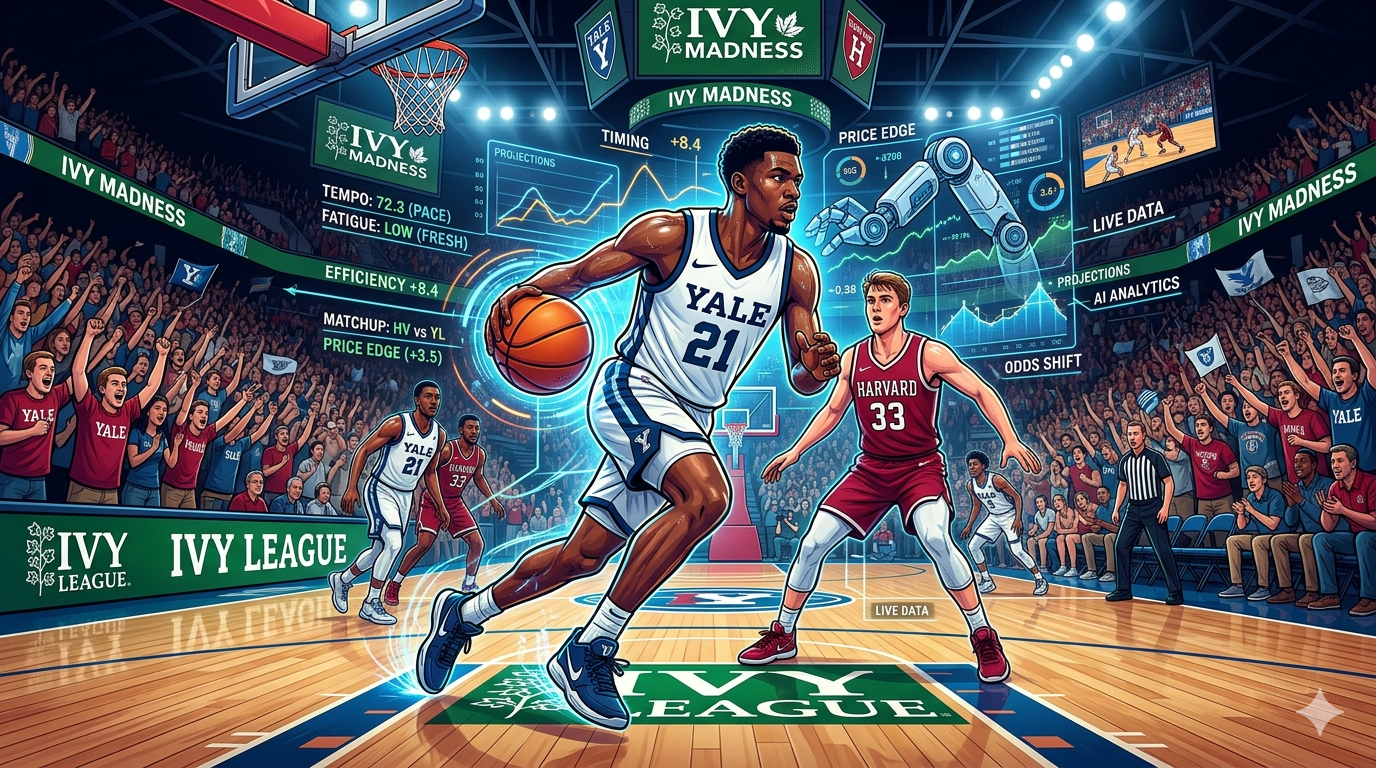
Ivy Madness rewards prep, not hype. As a sports analyst who builds AI-driven models, I focus on edges the market often misses. That includes tempo quirks, back-to-back fatigue, shot profile mismatches, and subtle situational trends that don’t show up in the box score. My goal is to turn league data into clear numbers, shape positions with discipline, and spot live opportunities when gyms get tight and legs get heavy. This guide walks through the practical ways to apply data-driven strategies in the Ivy League tournament, or Ivy Madness, using ATSwins tools to track, plan, and execute your bets effectively.
Table of Contents
- Format and schedule quirks
- Matchup edges that move numbers
- Market timing and bet types
- Modeling workflow
- Risk management and execution
- Putting the angles together on an Ivy Madness weekend
- Concrete examples of angles you’ll likely see
- How to layer ATSwins into your Ivy Madness process
- Quick-reference: bet types and when to prefer them
- A minimal Ivy Madness numbers template you can copy
- Conclusion
- Frequently Asked Questions (FAQs)
Format and Schedule Quirks
Back-to-backs change everything. Short rest boosts the value of deeper benches, increases foul risk on bigs, and pushes me toward first-half spreads and some team totals when endgame fouling is lighter. Pace and shot profile drive prices, so I focus on 3-point attempts versus rim attempts, turnover pressure, and defensive rebounding. Neutral-site gyms can mute shooting early, which makes totals and first-half angles more important than many bettors realize.
The Ivy League tournament is a tight four-team field. Semifinals happen on Day 1 and the title game on Day 2, so compression matters. Teams face familiar opponents since everyone has already played home and away during the regular season. Coaches know each other’s sets, counters, and late-game actions, which reduces the edge of surprise plays and increases the value of execution and personnel fit. Lines also open with limited uncertainty. Oddsmakers and bettors have two head-to-head data points and full-conference context, so early attention or specialization in micro-mismatches is required to gain an edge.
The neutral-site feel is regional, not NBA-glitzy. Travel is light, usually buses rather than flights, so venue familiarity matters. Sightlines, crowd distribution, and lighting all impact early shooting. Bands, student sections, and alumni can create mini home-court vibes that swing momentum but rarely mimic a true home edge. First-half unders in game ones at a new site often appear, and slight downticks in 3-point efficiency early can be a live betting angle if bricks accumulate without major changes in shot quality.
Back-to-back days also highlight depth, legs, and foul trouble. Semifinal winners may be a touch spent on Day 2, especially teams with short rotations or heavy reliance on a single creator. Monitoring bench minutes, players logging 36+ minutes, and bigs with 3+ early fouls can inform pace projections and fatigue adjustments. With modest possessions and familiar opponents, variance compresses, but tight ranges around totals emerge if shot quality is stable. Understanding how endgame fouling interacts with coaching style helps refine first-half and total plays.
Matchup Edges That Move Numbers
Pace and shot profile are primary movers. Identify each team’s offensive tendencies: drive-and-kick, Princeton actions, post touches, or ball-screen pull-ups. Compare them to opponents’ filters: rim protection, perimeter chasing, or overhelp corners. High 3-point rate versus strong perimeter defense can swing totals, but quality matters more than volume. If both teams collapse into the paint, mid-range attempts spike, lowering efficiency and slightly depressing totals unless elite shooters are involved.
Defensive rebounding and turnover rates create hidden points. Tight gyms with familiar scouting make extra possessions valuable. Look at opponent defensive rebounding by position, live-ball turnover tendencies, and token pressure in second halves. Small edges here can translate to six-to-ten points in expected value.
3-point math is crucial. Regress percentage but maintain attempt volume. Predict efficiency using season-long data, the last six to ten games, and site adjustments. Early sightline dampening and short prep can delay set-call precision, so clean looks often emerge later. Live monitoring of repeated open corner threes helps gauge when coaching adjustments will kick in.
Coaching adjustments from regular-season meetings matter. Meeting one often serves as a feel-out, meeting two begins the adjustment war, and tournament games are about leveraging third options. Track lineups that were targeted in switches or press-heavy possessions. Build a “tape card” for each matchup, noting actions that produced or imploded in points per possession, then assess repeatability with current personnel.
Bench minutes share on Day 2 can create minor swings. Tighter whistles or fatigue will force the ninth man into six-to-ten meaningful minutes. Track timeout usage in semifinals, which can indicate which starters will be rested, subtly helping older players maintain energy. Arena sightlines and muted early shooting can affect projections; adjust first-half three attempts down slightly if both teams appear cautious.
Seed versus efficiency gaps are another edge. A three-seed with better predictive metrics than the two-seed is common. Watch for narrow loss margins and strong shot-quality differentials. Lower seeds in these cases may provide side or moneyline value.
Market Timing and Bet Types
Opening markets can be soft, which allows clear edges. If a model flags a 1.5-point edge on a side or a two-point edge on a total, it is worth hitting pre-open limits. Late markets often reflect public action, hot narratives, and revenge angles. Widespread instantaneous pops indicate true market information, while isolated moves often reflect position-taking.
Derivatives like first halves and team totals often capture angles more effectively. First halves can exploit venue or scripted-set advantages, while team totals shine when one offense faces an inefficient defensive matchup. Live angles matter in slow tempos with lighter endgame fouling. Track shot clock usage, whistle rates, and pace deviations to spot live under or over entries. Props tied to rebounds or usage can surface as rotations tighten.
Respecting limits is key. Ivy markets can be efficient, and chasing numbers in small conferences kills ROI. Record missed numbers, review them post-mortem, and move on.
Modeling Workflow
Blend priors and in-season form. Start with preseason talent ratings and last season signals but taper them heavily by March. Weight in-season form with recency but cap the influence of the last five games to avoid skewing your mean.
Build base ratings using adjusted offensive and defensive efficiencies on a per-possession basis. Apply small recency weights and smooth opponent adjustments. Add neutral-site adjustments to account for past neutral performance and venue effects, generally small unless a team has a clear travel profile. Simulate possession counts using blended tempo and run multiple iterations to capture low-possession variance.
Keep 3-point rates sticky while regressing percentages. Account for shooter health, minute projections, and fatigue from back-to-back games. Confirm injuries and rotations through official league sources, including warm-up participation, which feeds into Day 2 projections.
A simple Ivy Madness template includes power rating differences, neutral-site adjustments, matchup adjustments, pace blends, and efficiency expectations. Outputs cover spreads, totals, alt-lines, first-half numbers, and team totals. Cap single-factor matchup moves unless context demands otherwise, and avoid overreacting to 2–3 consecutive made threes without a quality shift.
How I Use ATSwins and Market Screens Together
Numbers are built offline, then synchronized with ATSwins tools for betting splits, consensus context, and profit tracking. Historical archives help identify whether unusual moves or narratives have paid previously. Use projections and tracking from ATSwins for portfolio context, combine them with your Ivy-specific templates, and maintain a "numbers to bet" sheet listing entry points and contingency plans.
Risk Management and Execution
Define stake sizing and closing line value (CLV) tracking using a fixed-fraction plan. Ivy Madness is short, so avoid oversized exposure. Track CLV across sides, totals, and derivatives, and rebalance accordingly.
Shop regulated books and pre-write numbers. Execution tips include hitting openers with defined edges, adjusting finals for accumulated fatigue, and maintaining notes on referees and situational spots. Post-mortems help identify repeatable edges versus noise.
Putting the Angles Together on an Ivy Madness Weekend
A practical workflow begins before the bracket locks. Set base ratings, draft semifinal lines, and matrix potential finals. Note recent injuries or rotation trends. The day before semifinals, publish buy points and identify first-half lean candidates. On the morning of semifinals, hit openers and set alerts for key move triggers.
During the games, track possession counts, fouls, timeout usage, and repeated scoring actions. Between games, re-rate finalists for minutes load, foul issues, and counter-actions. On final day, compare adjusted numbers to market, consider first-half derivatives, and monitor props. A compact Ivy-specific checklist covers venue, pace, shot profile, glass and turnover gap, coaching adjustments, bench share, seed vs efficiency, injury/rotation checks, market position, and post-mortem notes.
Concrete Examples of Angles You’ll Likely See
Slow tempo games with selective three-point shooting usually favor first-half unders. Short-bench favorites after high-possession semifinals often have smaller full-game spreads than models suggest, with potential live overs for opponents if legs fade. Lower seeds with top predictive metrics may have undervalued side or moneyline potential. Unders appear when both coaches know each other’s key actions and refs allow contact efficiently.
How to Layer ATSwins Into Your Ivy Madness Process
Start with your numbers, then cross-check ATSwins projections, splits, and tracking to confirm market alignment. Profit tracking helps determine whether derivatives like first halves or team totals perform as expected. Recommended flow: build spreads and totals, check ATSwins consensus, log entries, and review CLV post-game for iterative tweaks.
Quick-Reference: Bet Types and When to Prefer Them
Full-game sides are ideal for multi-factor edges. Full-game totals work when pace, shot profile, and endgame foul plans are clear. First-half sides and totals capture early fatigue or venue-specific effects, especially on Day 2. Team totals excel when one offense faces a defensive mismatch. Live bets work when pace or shot quality diverges from pregame priors.
A Minimal Ivy Madness Numbers Template You Can Copy
Inputs: adjusted offensive and defensive ratings, recent form weights, neutral-site tweaks, pace blends, shot profile deltas, 3-point regression, rebounding/turnover differential, foul expectations, bench share, back-to-back fatigue. Outputs include spreads, totals, first-half numbers, team totals, and alt totals. Triggers guide when to bet sides, totals, first-half, or live entries. Notes capture the decisive actions and endgame strategy.
Conclusion
Ivy Madness rewards disciplined modeling and clear edges. Spotlight pace and shot profile, account for back-to-backs and foul trouble, and time your markets strategically. Keep processes simple, verify injuries and refs, and leverage ATSwins for data-driven picks, player props, betting splits, and profit tracking across multiple sports. Free and paid plans can help sharpen your Ivy League tournament betting workflow.
Frequently Asked Questions (FAQs)
What does Ivy League basketball tournament betting angles mean?
These are repeatable factors that tilt odds in March. Key angles include pace, shot profile, defensive rebounding, turnover pressure, neutral-site effects, coaching tweaks, and short rotations.
How do fatigue, foul trouble, and short benches change angles on Day 2?
Back-to-backs squeeze legs. Defensive rebounding dips and late closeouts may lift opponent three-point rates. Bigs in foul trouble force small-ball rotations. Adjust offensive rebound chances, slightly lower effective FG, and widen player-minute volatility.
Can I build angles without overfitting?
Yes. Use season pace, neutral-site and matchup nudges, regress three-point percentages, adjust for free-throw rate and rebounding, simulate possessions, and blend predictive ratings with matchup adjustments.
When should I place bets—openers, first half, or live?
Openers for clear edges, first halves for slow matchups, and live when early pace or shot quality diverges. Always pre-set prices and pass if markets are correct.
How can ATSwins help apply these angles?
ATSwins offers projections, splits, profit tracking, pace and shot-profile insights, fatigue alerts, and live-friendly thresholds to guide your Ivy League betting efficiently.
Related Posts
AI For Sports Prediction - Bet Smarter and Win More
AI Football Betting Tools - How They Make Winning Easier
Bet Like a Pro in 2025 with Sports AI Prediction Tools
Sources
The Game Changer: How AI Is Transforming The World Of Sports Gambling
AI and the Bookie: How Artificial Intelligence is Helping Transform Sports Betting
How to Use AI for Sports Betting
Keywords:
MLB AI predictions atswins
ai mlb predictions atswins
NBA AI predictions atswins
basketball ai prediction atswins
NFL ai prediction atswins