
How Do I Research UFC Fighter Performance and History? - 101
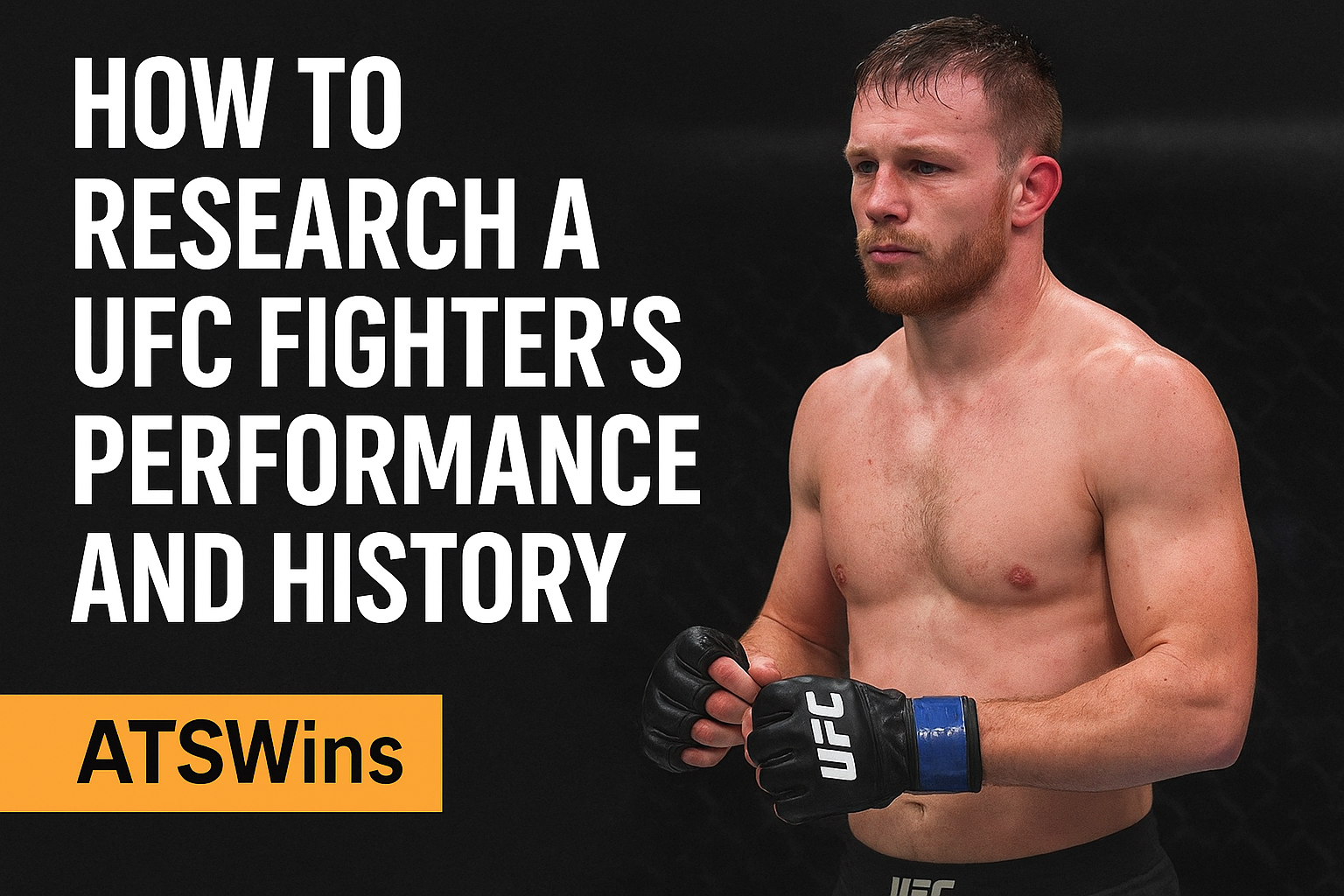
When you’re getting into UFC betting or just want to understand fighters better, you can’t just rely on quick stats or a hype video. You have to dig deeper and really break down who these athletes are, where they’ve fought, and how they perform in different situations. It’s not about memorizing a couple of numbers. It’s about building a profile that tells you what a fighter can and can’t do, how they match up against certain opponents, and what kind of spots they usually win or lose in. That’s what separates casual fans from people who actually know what’s going on in the sport.
The process might sound complicated, but once you get into the flow, it’s actually kind of addicting. You start spotting patterns that most people miss. You notice how a fighter handles pressure in round three compared to round one. You see how someone’s cardio falls off a cliff after a tough weight cut. And once you’ve built up a few of these fighter profiles, you can pull them up before fight night and instantly know where the edges are. That’s the whole point: understanding the tendencies that swing fights so you can make smarter calls.
Before we dive in, here’s one more thing. A lot of people stop at numbers, but context is what turns data into actual insight. Watching tape, checking weigh-ins, listening to what coaches say in camp updates, and even considering things like travel and altitude can change the picture completely. If you want to do this right, you can’t skip that part.
Start with a Clean Fighter Identity and Official Record
The first step in building any legit fighter breakdown is making sure you actually have the right information about the fighter. It sounds obvious, but you’d be surprised how many times fighters have duplicate records floating around. A lot of this happens with athletes from Brazil, Russia, or Asia, where names get spelled differently across sites. If you don’t take the time to line this stuff up, you’ll end up with bad data, and bad data equals bad calls.
So, what do you do? First, confirm the fighter’s full legal name and any nicknames. Then lock in their date of birth, nationality, and hometown. After that, check their weight class history. Some fighters move around a lot, especially on short notice. Knowing whether someone is really a lightweight fighting at welterweight or a natural featherweight trying to bulk up can explain a lot about their performance.
Physical stuff matters too. You’ve got to nail down their stance, height, and reach. Stance changes sometimes go unnoticed. A fighter who fought orthodox for years may suddenly start switching after a camp change. Reach numbers are another one that varies, depending on where you look, so cross-check it whenever you can.
Once you’ve got their baseline identity squared away, move on to their official record. UFC Stats is the best place to start for UFC fights because it has the most complete data: opponent names, dates, methods of victory, rounds, time, strikes, knockdowns, takedowns, and even control time. But don’t stop there. Regional fights and canceled bouts often slip through the cracks, and that stuff can be important when you’re figuring out a fighter’s true experience level.
Core Performance Metrics that Predict Outcomes
Here’s where it gets fun. Numbers can’t tell you everything, but certain stats consistently point toward how a fight is going to play out. Significant strikes landed per minute (SLpM) is one of the best ways to measure how aggressive a fighter is offensively. Significant strikes absorbed per minute (SApM) tells you how much punishment they usually take. Accuracy and defense numbers help balance those two out, giving you a sense of how efficient their offense and defense really are.
Knockdowns are another big one. If a fighter can score knockdowns regularly, it’s not just about power, it’s about how dangerous they are in exchanges. Combine that with opponent knockdown rates and you can get a good read on durability. For grappling, takedown attempts, accuracy, and defense are all critical. Control time is huge too. A fighter who spends most of their minutes holding someone against the cage or on the mat is going to sway judges, even if they aren’t landing tons of strikes.
You also want to look at win-method splits. Some fighters rack up finishes in the first round but fall apart when they don’t get an early KO. Others build momentum late and win by wearing people down. Looking at round-by-round stats shows whether someone is a fast starter or more of a grinder. Pair that with strength of schedule, and you’ll know whether those numbers are inflated by weak opponents or actually hold up against tougher competition.
Adding Context Beyond the Numbers
Data is cool, but fights don’t happen in spreadsheets. That’s why you need to add layers of context that numbers just can’t capture.
Start with opponent styles. Southpaw versus orthodox is a big deal because it changes angles for jabs, body kicks, and counters. Reach and height differentials matter too, but only if the fighter actually knows how to use them. Then, think about style matchups. A wrestler who can’t handle scrambles is in trouble against someone who thrives in chaos. A striker with no takedown defense is going to get mauled by a high-paced grappler.
Camp changes are another underrated factor. Fighters who switch gyms often bring in new strategies, better conditioning, or different training partners. You’d be surprised how many careers turn around after a big camp switch. Same goes for altitude training or going abroad for camp.
Weight class shifts can completely change a fighter’s trajectory. Cutting too much weight can wreck cardio and durability. Moving up can give someone a second life, but they’ll also deal with bigger opponents. Always track weight misses, because fighters who miss the cut often underperform.
Finally, pay attention to damage load and layoffs. A fighter coming off multiple knockouts in a short window is risky. Someone who’s been out a year or two might look rusty in round one. Injuries are harder to confirm, but when a fighter mentions surgery or a nagging problem, you should note it.
The Role of Film Study
Watching tape is where you tie everything together. Stats can tell you someone has great takedown defense, but film shows you how they actually defend. Do they sprawl and circle out, or do they just cling to the fence and hope the ref breaks it up? That kind of detail makes a huge difference.
Pick three to five fights that match the upcoming opponent’s style. If the fighter is about to face a southpaw striker, pull up their past fights against southpaws. If they’re facing a wrestler, watch how they’ve handled grapplers. Always include at least one recent fight so you know where they are now, not just where they were two years ago.
While watching, code what you see. Track entries, defense, counters, takedowns, top control, bottom survival, and transitions. Look for how they react when they’re hurt or put in a bad spot. Do they panic? Do they reset? Do they fire back with counters? That’s the stuff that never shows up in stat sheets but absolutely decides fights.
Turning Numbers into Models
Once you’ve got stats and film, the next step is making it usable. That’s where building simple models comes in. Normalize stats per minute so you can compare fighters who have different fight lengths. Adjust for strength of schedule so you’re not comparing numbers from someone who’s fought contenders to someone who’s fought regional-level guys.
From there, you can build indices for striking, wrestling, grappling, and form. Each index combines key stats into a single score that’s easier to read. For example, a striking index might combine SLpM, accuracy, defense, knockdown rate, and target mix. A form index could weigh the last three fights, adjusting for layoffs.
These models don’t have to be complicated. The key is consistency. Use the same inputs and weights across fighters so you can compare apples to apples. And always note when the sample size is small. Early-career fighters can look amazing on paper because they’ve only had one or two short fights.
Building and Maintaining Fighter Profiles
At this point, you’ve got enough information to create a real dossier for each fighter. Lay it out in a clean format: name, age, height, reach, stance, camp, weight class, and record. Add their method-of-victory splits, key metrics, and trends. Include notes about camp changes, injuries, or weight issues. That way, when fight week comes, you can quickly refresh yourself on who they are and how they match up.
The work doesn’t stop there. You have to keep your profiles updated. After each fight, add the new stats and notes. Update your indices. If a fighter switches camps or moves weight classes, log it. Over time, you’ll have a living library of fighter profiles that gets sharper with each update.
Practical Tips and Common Pitfalls
A few quick tips will make your process way smoother. Standardize names right away to avoid duplicate records. Automate your calculations for per-minute stats so you don’t waste time doing math every week. Keep a checklist for fight week updates, like opponent changes and weigh-in results.
On the flip side, avoid common traps. Don’t overreact to one fight. Everyone has off nights, and everyone has standout performances. Look for consistent patterns across multiple fights. Don’t treat significant strikes as the be-all and end-all. And don’t mix UFC-level stats with incomplete regional data without labeling it clearly.
What “Good” Looks Like
A strong fighter profile should feel complete and organized. The record is clean, the stats are adjusted, the context is layered in, and the film study connects everything. It should explain not just what the fighter has done, but why they win or lose fights, and how that might play out in the future. When you hit that level, you’ll notice your reads get sharper and your confidence goes up.
The end goal isn’t just to collect numbers. It’s to understand fighters on a deeper level so you can predict how their skills, tendencies, and decisions will translate to their next matchup. That’s what makes this process worth it.
Conclusion
We’ve covered a lot here: verifying fighter identity, pulling reliable stats, blending data with tape, and adding context like camp changes and weight issues. The main thing to remember is that this isn’t a one-time job. Fighter profiles are living documents. You have to keep updating them after weigh-ins, fights, and major camp changes. If you stay disciplined, you’ll end up with a toolkit that gives you real edges before fight night.
If you want to take things further, check out ATSWins . It’s an AI-powered platform that offers data-driven picks, player props, betting splits, and profit tracking across major sports, including UFC. Whether you’re new to this or already deep in the game, it’s a smart way to add extra confidence to your calls.
Frequently Asked Questions
How do I know if stats are reliable?
Start with UFC Stats since it’s official, then cross-check with other sources. Numbers only work when paired with film study.
Do I need to watch film if I already have stats?
Yes. Stats show the “what,” film shows the “how.” Both are needed for a complete read on a fighter.
How many past fights should I watch?
Three to five is enough. Focus on fights that match the upcoming opponent’s style.
Why are weigh-ins important?
They reveal how healthy a fighter looks after a cut. Bad cuts often lead to poor late-round performance.
What’s the biggest mistake people make?
Overreacting to one fight. Look for patterns across multiple bouts before drawing conclusions.
How often should I update fighter profiles?
Every fight week. Profiles go stale fast if you don’t refresh after weigh-ins or camp changes.
Can ATSWins help with UFC picks?
Yes. ATSWins covers UFC alongside major sports, offering data-driven picks, betting splits, and tracking tools.
Related Posts
AI For Sports Prediction - Bet Smarter and Win More
AI For Sports Betting - Smarter Strategies for Winning in 2025
Bet Like a Pro in 2025 with Sports AI Prediction Tools
Sources
The Game Changer: How AI Is Transforming The World Of Sports Gambling
AI and the Bookie: How Artificial Intelligence is Helping Transform Sports Betting
How to Use AI for Sports Betting
Keywords
Free NFL AI sports predictions
NFL week 2 odds and early predictions
ai mlb predictions atswins
NBA AI predictions atswins
basketball ai prediction atswins
NFL ai prediction atswins