
AI NFL Prediction Model - How to Predict NFL Games With AI
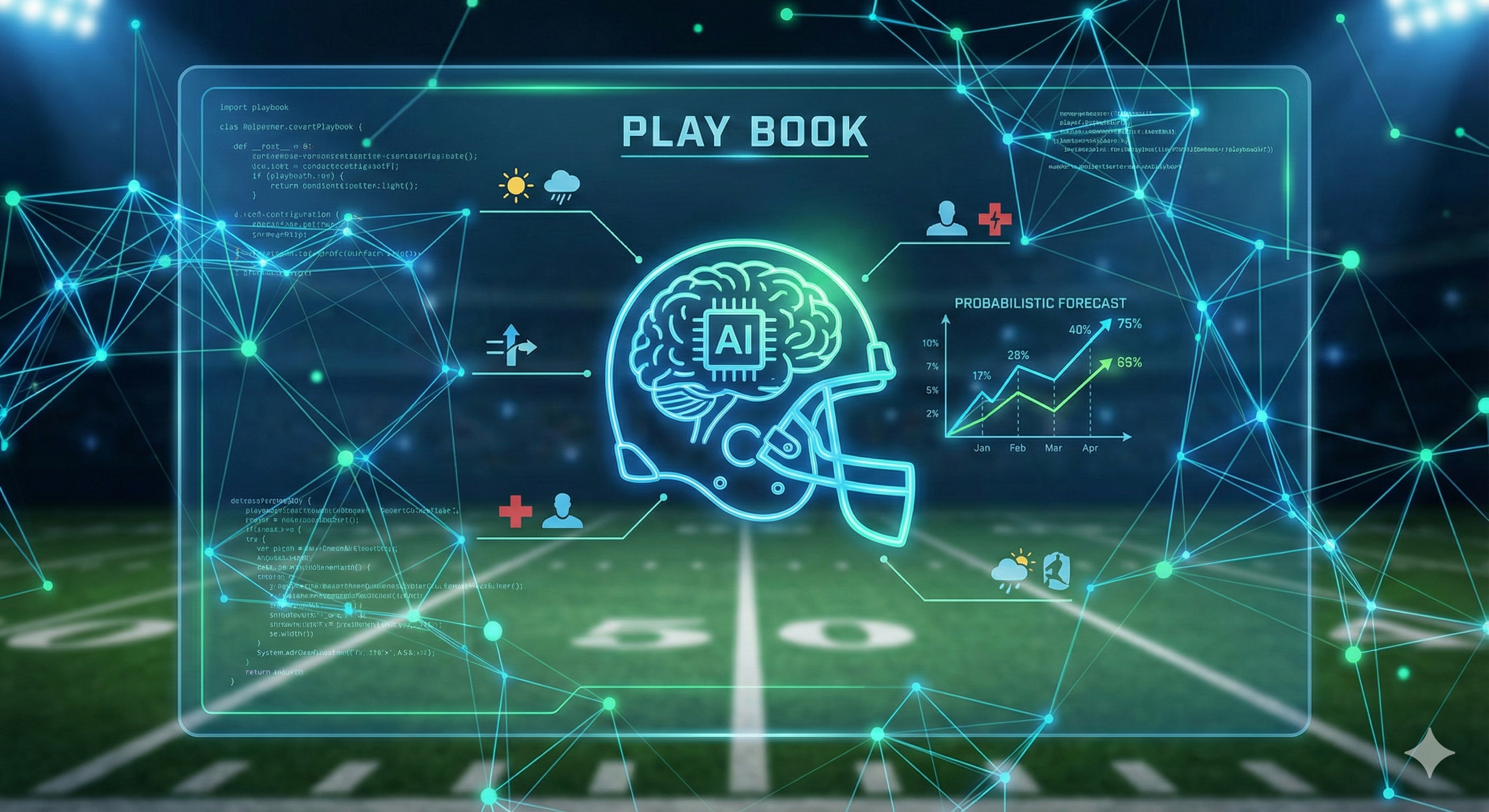
Sports outcomes aren’t just random—they follow patterns that, when understood, can give bettors a real edge. This blog dives into how those patterns are uncovered, explaining how data is collected, structured, and analyzed to produce probabilities that actually mean something. From tracking team form and injuries to considering travel schedules and weather conditions, every factor adds a layer of insight. The goal is to show how forecasts are turned into actionable wagers, breaking down win odds, spread edges, totals, and other key metrics in a clear, practical way. It also explains the tools and methods behind the scenes, so readers can see how predictions are built, tested, and calibrated for reliability. At the heart of it all is ATSWins , an AI-powered sports prediction platform that pulls all these pieces together, helping bettors turn data into smarter decisions while keeping the process transparent and grounded in real numbers.
Table Of Contents
- Building an AI NFL Prediction Model That Bets the Details
- Data foundation for an AI NFL prediction model
- Modeling Architecture and Training
- NFL-specific Feature Engineering
- Evaluation and Deployment
- Operational Workflow and Governance
- Conclusion
- Frequently Asked Questions (FAQs)
Key Takeaways
Clean, time-aware data matters most. Models perform best when using strict week-by-week splits to prevent leakage, pregame features are used exclusively, and rolling origin backtests validate accuracy. Starting simple is the safest route. Initial baselines like logistic regression for win probability or Poisson models for totals are transparent, interpretable, and easy to calibrate. From there, scaling into gradient-boosted trees with proper calibration is possible, while tracking Brier score, log loss, and closing-line value ensures reliability. Context in the NFL is crucial, including quarterback status, rest and travel considerations, opponent-adjusted efficiency, and environmental conditions such as weather and field surface. Interactions like rush rate, combined with the game script, provide meaningful insights. Risk management is equally important, using flat stakes or conservative Kelly strategies, versioned data and model cards, and drift checks after injuries or weather changes, all with a clear rollback plan. ATSWins implements these practices daily, offering an AI-driven sports prediction platform with data-driven picks, player props, betting splits, and profit tracking across NFL, NBA, MLB, NHL, and NCAA, giving bettors tools and guidance to make smarter decisions.
Building an AI NFL Prediction Model That Bets the Details
The foundation of a reliable prediction model begins with clean, well-structured data. ATSWins approaches this with a modular system, allowing updates weekly and across seasons. Public sources provide historical play-by-play data and team-level metrics, while internal tracking captures context like injuries, depth charts, and environmental conditions. Play-by-play data forms the backbone, including expected points added (EPA), success rate, air yards, run/pass classification, and penalties. Team-level priors, opponent-adjusted strength metrics, and conservative starting values that regress toward league averages form the initial baseline. Injury reports are included, capturing designations, practice trends, and depth chart positions, while weather and surface conditions are matched to stadiums and kickoff times. Travel and rest are accounted for, measuring days since the last game, travel distances, and short-week indicators. Market-agnostic ratings, such as Elo or Bayesian EPA-based indices, provide a neutral measure of team strength. Game context includes stadium information, referee crews, and altitude, while roster packages track personnel usage and motion rates.
Labels and targets are defined to reflect betting outcomes. Win probability is modeled as a binary target for home or away wins, while spread cover is a binary target for whether a team beats the closing spread. Totals can be modeled per team and combined, or as an Over/Under probability around listed totals. Live betting labels track drive- or play-level win probability, next score type, and scoring likelihood for micro markets. Granularity is chosen based on product flow: game-level models focus on pregame picks, drive-level models support live probabilities, and play-level models support high-frequency evaluation and research. A practical approach builds game-level pregame models for ATS, moneyline, and totals, with drive-level live models feeding dashboards.
Preventing leakage is crucial. Only data available before kickoff is used, including the latest official injury reports and forecasts. Closing market lines are excluded unless specifically included for comparison. Postgame statistics are never incorporated into pregame features. Rolling-origin splits ensure chronological training and testing, and playoffs are evaluated separately due to their out-of-distribution nature. Priors are frozen at kickoff, with updates only occurring in live models. ATSWins relies on well-documented data sources and internal checks to maintain consistency and accuracy.
Modeling Architecture and Training
Building a reliable sports prediction model starts with a solid foundation, and that’s where transparent baseline models come in. Simple models like logistic regression are often used for win/loss outcomes and spread covers because they are easy to interpret and calibrate. They give a clear picture of how each factor—like quarterback health, team efficiency, or travel—affects the probability of a win. Totals are usually modeled with Poisson or bivariate Poisson approaches, which are great for capturing the natural correlation between the points scored by each team in a game. On top of that, drive-level models estimate live win probabilities as the game unfolds, helping track momentum shifts and giving more dynamic insights.
Baselines also serve another purpose: they act as benchmarks. By starting simple, it’s easy to spot when more complex models actually improve predictions rather than just overfitting noise.
Gradient-boosted trees are the workhorses for structured sports data. They can pick up on nonlinear interactions, like how wind affects passing depth or how pressure rates against quarterbacks influence scoring efficiency. These models handle complex patterns without becoming a black box. Tools like SHAP values help make these models interpretable, showing exactly which features are driving a prediction, so bettors can see the reasoning behind a pick rather than just guessing.
Neural networks are optional but useful in certain scenarios. They work best when adding embeddings for categorical variables—think player identities, team histories, or coach tendencies—or when modeling sequences like drive outcomes. Keeping neural networks simple, with only a few dense layers and proper regularization, ensures stability without overcomplicating training.
Reproducibility is key. Pipelines are set up to apply the same transformations consistently across training, validation, and testing, and time-aware cross-validation ensures future games don’t leak into model learning. Calibration methods like isotonic regression or Platt scaling make sure probability outputs reflect real-world outcomes accurately. Class imbalances—common with spread covers or heavily favored teams—are addressed thoughtfully, often by adjusting decision thresholds based on expected value rather than relying on a fixed 50/50 cutoff. Hyperparameter tuning respects chronological order, using rolling windows to avoid future data influencing current predictions.
Altogether, this modeling setup balances simplicity, interpretability, and sophistication, creating predictions that are not just statistically sound but actionable for bettors looking for a real edge.
NFL-Specific Feature Engineering
In NFL modeling, the details really matter. Pregame signals are the building blocks that heavily influence predictions. Factors like rest days, short-week flags for Thursday or Saturday games, travel distances, and time zone shifts can drastically affect player performance and team efficiency. Quarterback status is especially critical—starter versus backup, injury history, and continuity with the offensive coordinator can swing outcomes more than most stats. Offensive line health matters too, since line performance directly impacts both run and pass game efficiency. Team strength indices, like Elo-style ratings or EPA-based adjustments, provide a concise snapshot of how a team stacks up against the league, while early-season prior blending helps smooth out volatility by balancing last season’s performance with current trends.
Beyond pregame signals, season-to-date and in-game aggregates add another layer of precision. Metrics such as offensive and defensive EPA per play, red zone efficiency, early-down success, pressure rates, explosive plays, drive efficiency, special teams contributions, and penalty trends all feed into the model. These are often adjusted for opponent strength, so a big win against a weak team doesn’t inflate expectations. Environmental factors also play a key role. Surface type, dome versus outdoor stadiums, wind speed, temperature extremes, and precipitation interact with team and player stats, producing context-sensitive predictions that account for real game-day conditions.
Capturing the logic of football requires interaction terms. Rush rate combined with game script shows how teams handle trailing situations, pressure mismatches highlight trench battles, yards-after-catch allowed versus opponent tendencies reflect defensive schemes, and quarterback mobility versus coverage type predicts scramble likelihoods. To maintain integrity, strict protocols prevent data leakage: all season-to-date stats use only pregame information, and environmental factors rely on forecasts rather than postgame realities. Feature templates standardize calculations across rolling windows, positional weightings, and opponent adjustments, keeping the process consistent and reliable week to week.
Evaluation and Deployment
When it comes to deploying NFL models, the focus is on decision quality, not just raw accuracy. Metrics like Brier scores and log loss measure how well probabilities align with actual outcomes, while calibration curves reveal whether a 65% predicted chance truly wins about 65% of the time. Regression metrics help quantify total predictions, ensuring point estimates are meaningful. Stability is just as important—weekly monitoring checks for drift across teams, playing surfaces, weather conditions, and travel situations to catch any quirks early.
Bankroll simulations take these predictions into action. Flat-stake bets provide a baseline view, while fractional Kelly strategies help scale risk relative to edge and probability. Simulated wagers using model outputs against market lines test expected value and uncover opportunities without putting real money on the line. Stress tests push the model further: simulating late injuries, sudden weather changes, and early-season volatility ensures that predictions remain reasonable under uncertainty.
Before a pick goes live, it must meet strict acceptance thresholds. This includes a minimum edge over market lines, consistent historical performance, and clean, validated feature inputs. Versioned pipelines, model cards, and reproducible artifacts provide transparency and accountability, making it easy to trace exactly how a pick was generated. Once live, continuous monitoring tracks calibration drift, error segments, and performance across betting edges, maintaining consistency across weeks, markets, and conditions. This disciplined workflow ensures that each published pick is not just a probability but a decision backed by data, context, and careful validation.
Operational Workflow and Governance
Operational workflows ensure smooth and reliable model deployment. Experiment tracking logs, configurations, metrics, and artifacts, with a unique identifier for each weekly run. Schema checks verify column consistency, data types, and value ranges. Unit tests catch parsing errors, missing features, and special edge cases, including international games, daylight saving conversions, and Week 18 rotations. Weekly retraining aligns with the game schedule, maintaining stable parameters and handling midweek updates for short-week games. Feature stores separate pregame and live features, enforce immutable snapshots, and record provenance. Documentation and audit trails allow reproducibility of every pick, including decisions not to bet certain edges. Rollback plans enable rapid response if calibration or schema checks fail.
ATSWins integrates predictions into actionable products. Picks are published with probabilities, suggested stakes, and concise rationale. Player props are derived from team-level plays and individual participation rates. Betting splits provide context without influencing core training, and profit tracking logs every pick with price, timestamp, stake, and performance metrics. A structured weekly workflow updates raw data, recalculates features, retrains models, recalibrates probabilities, generates picks, and monitors live performance. Tools include internal data catalogs, scikit-learn pipelines, XGBoost, reliability diagrams, and lightweight governance structures. Templates streamline feature lists, model cards, and pick artifacts. Common pitfalls, including overfitting, leakage, ignoring special teams, or mismanaging volume, are mitigated with disciplined processes. Extensions like player-level embeddings, sequence features, injury impact modeling, and coaching tendencies can enhance the model without compromising stability.
By following these structured processes, ATSWins delivers consistent, decision-ready probabilities for NFL games, powering both pregame and live predictions. Feature engineering, model transparency, probability calibration, and operational governance combine to create a robust system that enables bettors to make informed, disciplined wagers with confidence.
Conclusion
Effective NFL predictions rely on clean data, disciplined testing, and consistent bankroll strategies. Defining labels clearly, building opponent-adjusted features, accounting for environmental factors, and calibrating models produce actionable probabilities. Starting simple, tracking results, and iterating weekly ensures stability and reduces noise. ATSWins’ AI-powered platform provides data-driven picks, player props, betting splits, and profit tracking across NFL, NBA, MLB, NHL, and NCAA, helping bettors make smarter, informed decisions while managing risk.
Frequently Asked Questions (FAQs)
What is an AI NFL prediction model, and how does it make picks?
An AI NFL prediction model uses historical and current football data to produce probabilities for wins, spread covers, and totals. The system is trained on play-by-play and pregame information, validated through rolling seasons, and converts predicted edges into disciplined betting decisions. The model’s calibration ensures that, for example, a 60% win probability aligns closely with actual outcomes.
Which data should be included before kickoff?
Pre-game features should include quarterback status, offensive and defensive efficiency, injury reports, rest and travel, offensive line health, pressure rates, explosive plays allowed, field surface, dome conditions, wind, and temperature. Adjustments for opponent strength make statistics comparable across schedules. Concentrating on key, high-signal features avoids unnecessary noise.
How can one assess if the model beats the market?
Rolling backtests comparing model probabilities to closing lines, tracking ROI, closing-line value, Brier scores, and calibration metrics, reveal true performance. Using flat stakes or fractional Kelly approaches helps manage bankroll risk. Consistent performance across seasons indicates a genuine edge rather than luck.
How does ATSWins enhance model usage?
ATSWins integrates predictions into actionable tools with moneyline, spread, and totals probabilities, player prop projections, and profit tracking. It provides context for each pick, including rest, travel, weather, and opponent tendencies, enabling bettors to monitor edges, manage stakes, and track performance by league and bet type.
What are common mistakes in building AI NFL models?
Data leakage, overfitting, neglecting injuries and weather, ignoring quarterback importance, skipping calibration, and changing methods mid-season are frequent errors. Following a disciplined, repeatable process avoids these pitfalls and maintains reliability over time.
Related Posts
AI For Sports Prediction - Bet Smarter and Win More
AI Football Betting Tools - How They Make Winning Easier
Bet Like a Pro in 2025 with Sports AI Prediction Tools
Sources
The Game Changer: How AI Is Transforming The World Of Sports Gambling
AI and the Bookie: How Artificial Intelligence is Helping Transform Sports Betting
How to Use AI for Sports Betting
Keywords:
MLB AI predictions atswins
ai mlb predictions atswins
NBA AI predictions atswins
basketball ai prediction atswins
NFL ai prediction atswins