
AI Betting Tips: How to Maximize Your Edge With AI Odds in 2025
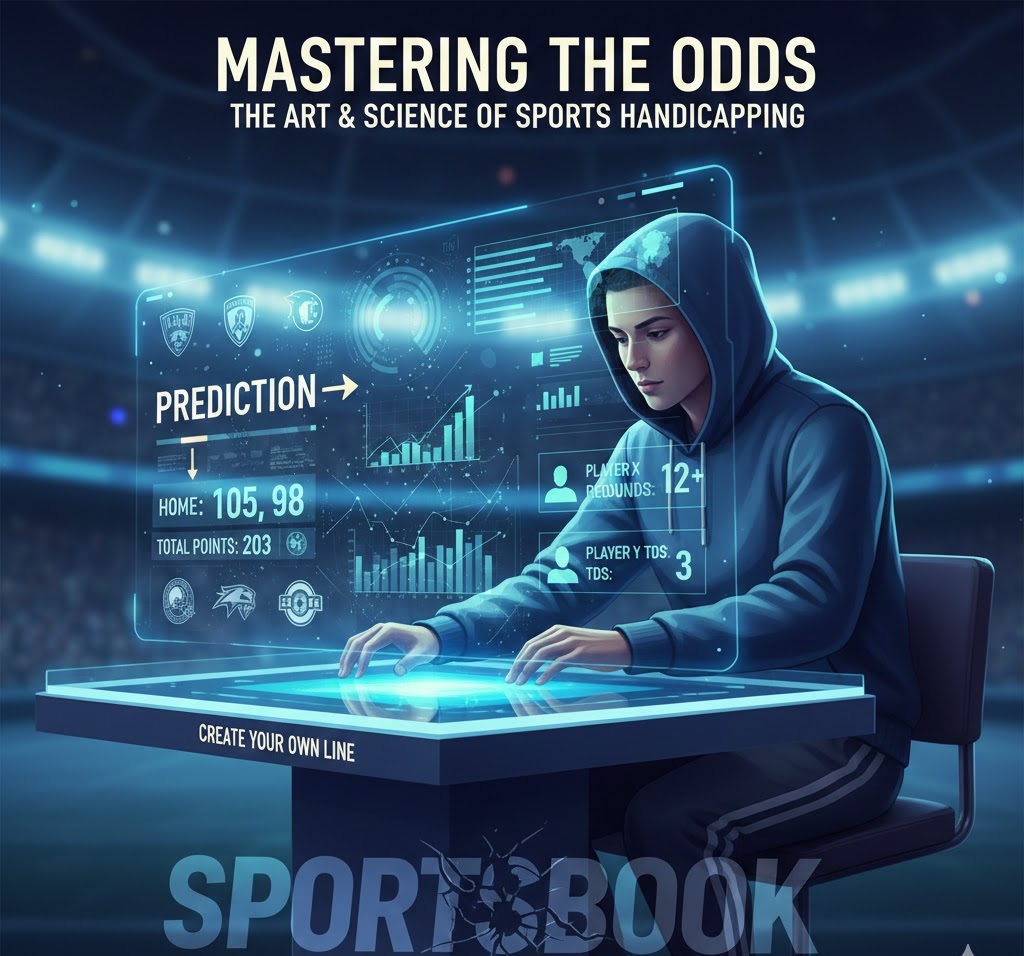
Sports handicapping is one of those things people hear about all the time, but most don’t really understand how it actually works. They’ll see someone on social media talk about their “model,” or they’ll hear someone brag about being a “professional handicapper,” and the average bettor is left wondering what that really means. Handicapping isn’t magic, and it isn’t guessing. In reality, it’s a structured way of approaching sports betting, and learning it can help you make way better decisions with your money. That doesn’t mean you’ll win every time, and it doesn’t mean you should suddenly start betting huge amounts. What it does mean is that handicapping gives you a real framework for breaking down games, spotting weaknesses in the market, and understanding what actually matters and what’s just noise.
This guide is here to walk you through the entire thing. Whether you're brand new to betting or you’ve already been around for a while and want to improve your process, everything in here is written in a simple and casual way so that even the boring parts feel normal and relatable. You won’t find complicated jargon, and you won’t get flooded with equations. Instead, you’ll get a clear explanation of what handicapping really means, how people do it, what methods exist, what the limits are, and how you can use these ideas to make more informed decisions. The point isn’t to turn you into a professional handicapper. The point is to help you understand the process and think like someone who isn’t just taking random shots in the dark.
Handicapping is a mix of research, intuition, experience, and discipline. You don’t have to use every method out there, and you don’t need to copy what someone else is doing. You just need to understand the principles and then make them your own.
Table of Contents
- What Is Sports Handicapping? Understanding the Basics
- Different Types of Sports Handicapping Methods
- Why Handicapping Isn’t a Guaranteed Path to Winning
- Using Handicapping to Improve Your Decision Making
- Sharp Bettors vs. Casual Bettors: What’s the Difference?
-
Final Thoughts: Handicapping as a Tool, Not a Magic Trick
What Is Sports Handicapping? Understanding the Basics
Sports handicapping is basically the art and process of trying to predict the outcome of a game. A handicapper is someone who studies different factors around a matchup and comes up with some kind of prediction or opinion. That prediction can take a lot of forms. Sometimes it’s a guess on who will win. Sometimes it’s estimating how many points will be scored. Sometimes it’s something more specific like player props. The point is that the handicapper is trying to create their own version of the line instead of blindly accepting whatever the sportsbook gives them.
A lot of people think handicapping is just analyzing stats, and while stats are definitely part of it, the real heart of handicapping is understanding the story behind those stats. For example, two teams might have similar offensive numbers, but one might have gotten those numbers against weak competition while the other had a much harder schedule. If you don’t understand context, you’ll misread numbers all the time. Handicapping helps you avoid that mistake by forcing you to look deeper.
Another thing people get confused about is thinking handicapping means guaranteeing wins. It definitely doesn’t. Even the best handicappers in the world win around 55% to 60% long-term, and that’s considered elite. The point of handicapping is not perfection, because perfection doesn’t exist in sports. The point is gaining an edge, even a small one, and using it repeatedly over time.
At its core, handicapping is about gathering information, sorting through it, looking for edges, and forming an opinion that isn’t just emotional. When most people bet, they bet teams they like, they chase narratives, or they react to hype. A handicapper learns to ignore all that and focus on what actually matters. It doesn’t mean you’ll suddenly start winning all the time, but it does mean the bets you place will be way smarter.
The basic foundation of handicapping involves a few things that almost everyone agrees on. You look at stats, you look at matchups, you look at injuries, you look at recent performance, you look at situational factors, and you look at the odds the sportsbook gives you. All of those pieces matter, and handicapping is simply finding a way to connect them into a prediction that feels informed and logical instead of impulsive.
Different Types of Sports Handicapping Methods
Handicappers use a bunch of different approaches. Some swear by one method. Others mix multiple styles together. The truth is that there’s no single correct way to handicap a game. What works for one person might not work for another. But there are a few major categories that most handicappers fall into, and understanding these categories helps you figure out what style fits you best.
One of the most common methods is statistical analysis. This is where someone looks at numbers like offensive efficiency, defensive efficiency, yards per play, pace, shooting percentage, turnover rates, and so on. They try to find patterns in the numbers that might give them insight into how a game will play out. Some people even build formulas or spreadsheets to help them stay consistent. The downside is that numbers don’t always tell the whole story, and relying only on stats can make you blind to situations where the numbers are misleading.
Another popular approach is situational handicapping. This method focuses more on the “feel” of a matchup. It looks at travel schedules, fatigue, motivation, emotional spots, revenge games, weather, altitude, and other human factors. A team might be statistically strong, but if they’re playing three road games in four nights, that matters. If a football team is traveling across the country for a morning kickoff, that matters too. These aren’t things that show up in a spreadsheet, and that’s why situational handicappers pay attention to them.
There’s also matchup-based handicapping. This is where someone focuses on how the strengths and weaknesses of two teams fit together. Maybe one team has a great pass offense but the other team has an elite pass defense. Maybe one team relies on three-point shooting but they’re going up against a defense that runs guys off the line. Matchups can completely shape a game, and understanding them is one of the most powerful tools a handicapper can have.
Then you have data-driven modeling. These are people who build actual models that simulate games or create projected spreads and totals. This type of handicapping can be very effective if the model is built well, but it requires a ton of work. It’s not just plugging numbers into a calculator. It takes time to find the right variables and weight them correctly. Models also need constant updating because sports evolve.
A smaller group of handicappers focuses on public perception and line movement. These people study how the market behaves, how the public bets, and how sportsbooks adjust their lines. Sometimes the best edge comes from spotting when a line is inflated because everyone is betting one side. Understanding market movement takes practice, but once you get good at it, you start seeing things that casual bettors completely miss.
Finally, some handicappers simply combine everything. They look at stats, matchups, situations, and line movement and try to form a full picture. This hybrid approach is usually the most practical for the average bettor because it doesn’t tie you down to one specific method.
Why Handicapping Isn’t a Guaranteed Path to Winning
A lot of people jump into handicapping thinking they’re going to become guaranteed winners just because they’re doing research. Unfortunately, that’s not how it works. Sports are unpredictable by nature. Unexpected things happen all the time. A star player might get injured mid-game. A backup might suddenly have a breakout performance. Weather can change out of nowhere. Coaches can make odd decisions. Refs can swing momentum. A ball might take a weird bounce. Those small things add up, and you can’t predict all of them no matter how much research you do.
Another reason handicapping isn’t perfect is because sportsbooks are extremely good at what they do. People underestimate how sharp the lines are, especially in major sports. Sportsbooks have access to massive amounts of information, and they use teams of specialists to set lines. They’re not guessing, and they’re not casual. When you’re betting, you’re going up against professionals who have already accounted for most of the obvious factors. That’s why edges are usually small. You’re not going to find a dozen mistakes in the lines every day. Finding even one or two edges can be tough.
There’s also the fact that everyone has biases, even people who handicap games. Maybe you like a certain team. Maybe you dislike a certain player. Maybe you overvalue a recent performance. Maybe you assume something that isn’t really true. Biases can ruin the handicapping process, and most people don’t even realize when their bias is creeping in. Learning to overcome bias is a long-term challenge.
On top of that, a lot of bettors don’t have proper bankroll management. Even if your handicapping is good, if you’re betting too much of your bankroll or constantly chasing losses, you can destroy yourself financially. A handicapper who goes 55% over the long term can still lose everything if they’re betting recklessly.
Sports handicapping also takes time. You have to be willing to read, research, think, make mistakes, and adjust. Most people don’t want to do that. They want fast answers and instant success, and handicapping just doesn’t work that way. It’s a skill that’s developed over years, not days.
The point isn’t to scare you away from handicapping. The point is to be realistic. Handicapping can give you a real edge, and you can become a smarter bettor. But you need to understand the limits so you don’t create false expectations for yourself.
Using Handicapping to Improve Your Decision Making
Even though handicapping can’t guarantee wins, it can absolutely improve the way you make decisions. When you learn to handicap games, you start thinking differently about sports. You stop reacting emotionally. You stop chasing narratives. You stop letting hype influence you. Instead, you start asking real questions. What does the matchup look like? What does the data say? What does the situation tell you? What does the line imply?
Decision-making in sports betting is mostly about discipline. Handicapping gives you structure, and structure helps you stay disciplined. When you have a system, even a simple one, you’re less likely to take impulsive bets. You’re less likely to chase losses. You’re less likely to fall for traps.
A good handicapping process usually starts with identifying the game you’re interested in. From there, you start breaking down the key factors. You look at the stats that matter. Not everything matters, so part of the process is learning which numbers actually tell the story. Then you look at matchups to see if either team has an advantage that might not be obvious at first. After that, you look at the situation. Is one team tired? Is one team traveling? Is there weather involved? Is there a motivational angle? All these things shape your prediction.
Once you’ve formed your own opinion of the game, the next step is comparing your opinion to the sportsbook’s line. If your projected outcome is close to the sportsbook’s line, you just pass. Not betting is a decision too, and it’s one of the most underrated decisions a bettor can make. If your projection is different from the sportsbook’s line and you feel confident in your reasoning, then you might have an edge worth betting.
What handicapping really does is help you think logically instead of emotionally. You learn how to separate your personal feelings from your decisions. You also learn that sometimes the best bet is no bet at all. You learn patience. You learn structure. You learn to trust your process instead of chasing random outcomes.
Sharp Bettors vs. Casual Bettors: What’s the Difference?
One of the biggest concepts in sports betting is the difference between sharp bettors and casual bettors. Sharps aren’t superheroes. They’re not magicians. They’re just people who take betting seriously and treat it like a strategy game instead of entertainment. Casual bettors are normal people who bet mostly for fun. There’s nothing wrong with either group, but understanding the difference helps you see where handicapping fits in.
Sharp bettors are disciplined. They track everything. They manage their bankroll. They look for small edges. They shop for the best lines. They understand variance. They don’t tilt. They don’t chase. They trust their process. Sharps use handicapping as a tool, not as a magic answer. They know they’re not going to win every time, and they’re fine with that because they play the long game.
Casual bettors, on the other hand, mostly bet for entertainment. They like parlays. They like favorites. They like public teams. They react to what they see on TV. They ride hot streaks. They chase losses. There’s nothing wrong with betting for fun, but casual bettors don’t usually think about long-term edges. They’re focused on the moment.
Handicapping is what bridges the gap between these two worlds. You don’t have to become a full-on sharp bettor who treats betting like a job. You can still have fun with it. But when you incorporate handicapping into your routine, you start making smarter decisions that push you slightly more toward the sharp side of the spectrum.
The biggest difference between sharps and casuals is that sharps respect the market. They know that every bet has a price. Casual bettors ignore price and just bet teams. Sharps understand that value is the most important thing. Even if a team is likely to win, the bet only makes sense if the odds give you enough value to justify the risk.
A lot of sharp bettors use tools like ATSwins to help streamline the process. Services like ATSwins can provide insights, research, and projections that save time and help bettors make more informed decisions without having to spend hours on analysis.
At the end of the day, sharp bettors are consistent and intentional, while casual bettors are impulsive and emotional. Handicapping is what moves you closer to the side that wins more often over time.
Final Thoughts: Handicapping as a Tool, Not a Magic Trick
Handicapping is one of the most misunderstood parts of sports betting. People either think it guarantees wins or they think it’s useless. The truth is somewhere in the middle. Handicapping isn’t magic. It won’t turn you into a guaranteed winner. But it will help you think clearly, make logical decisions, and avoid a lot of the mistakes that casual bettors constantly make.
When you learn to handicap games, you’re not trying to predict the future with perfect accuracy. You’re simply trying to find edges, even tiny ones, and using them consistently over time. You’re building a process. You’re learning how to separate real information from noise. You’re developing discipline.
Handicapping also teaches you something important about yourself. It shows you how emotional you get when money is involved. It shows you how tempted you are to chase. It shows you how impatient or impulsive you can be. The more you handicap, the more self-awareness you develop. That makes you a better bettor, but it also makes you better at managing risk in general.
At the end of the day, handicapping is a tool. It’s not a guarantee. It’s not a lock. It’s not a cheat code. But it can absolutely help you improve your decision-making and approach betting with a realistic mindset. If you use it the right way, it becomes one of the most valuable parts of your betting journey.
Whether you lean on your own research or you use a trusted service like ATSwins to guide your decisions, the goal is the same: make smarter bets, stay disciplined, avoid emotional decisions, and build long-term habits that actually make sense.
Handicapping doesn’t make betting easy, but it makes betting clearer. And for most people, that’s the difference between guessing and actually having a plan.
Related Posts
AI For Sports Prediction - Bet Smarter and Win More
AI Football Betting Tools - How They Make Winning Easier
Bet Like a Pro in 2025 with Sports AI Prediction Tools
Sources
The Game Changer: How AI Is Transforming The World Of Sports Gambling
AI and the Bookie: How Artificial Intelligence is Helping Transform Sports Betting
How to Use AI for Sports Betting
Keywords:
MLB AI predictions atswins
ai mlb predictions atswins
NBA AI predictions atswins
basketball ai prediction atswins
NFL ai prediction atswins
using ai to predict sports
ai score prediction today
ai sports betting technology
ai betting tips