
2026 NHL Stadium Series Guide: How to Get Tickets & Stay Warm
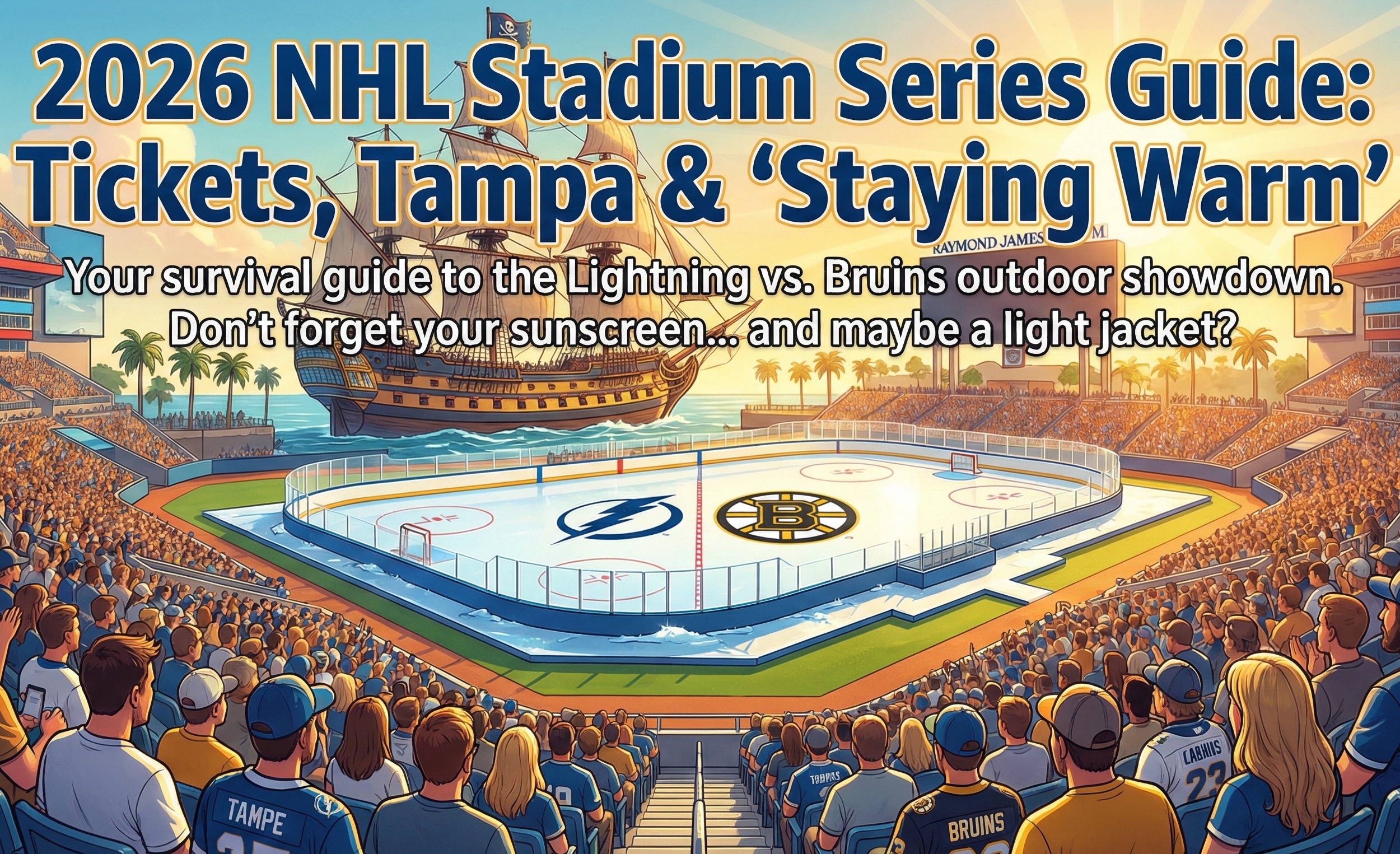
Outdoor hockey flips the script completely, and the 2026 NHL Stadium Series is going to add layers of complexity that standard models simply must respect to be accurate. As a pro analyst who leans heavily on AI and actual rinkside context to make my picks, I am going to show you exactly how weather, ice quality, and travel shape the pace of the game, the finishing ability of the players, and goalie play. I will also explain how to turn those signals into smarter projections and action before the market adjusts.
Outdoor hockey adds a massive amount of noise to the data. Weather swings like wind, sun glare, and humidity can significantly slow down rushes and finishing ability. It is smart to keep your stakes smaller and price totals with extreme care. The ice and the sightlines change how teams play fundamentally. You will see shorter shifts and a lot more dump-and-chase action. Goalies have to fight rebounds a lot more often, so you should watch shots on goal and save props moving. Your game day checklist needs to include an hour-by-hour forecast, confirmed starters, travel and rest notes, and line moves. Do not chase late steam, but rather let the price come to you. Fan stuff matters too, specifically regarding seats versus wind, wearing layers, and dealing with transit and parking. The puck drop might slide a bit, so you should arrive early. Our edge is found at ATSwins.ai which is an AI-powered sports prediction platform offering data-driven picks, player props, betting splits, and profit tracking across NFL, NBA, MLB, NHL, and NCAA. Free and paid plans give bettors clear insights and simple guides to make smarter and more informed decisions.
Setting the Ice: 2026 NHL Stadium Series Outlook for Bettors and Fans
Overview & context
What the 2026 NHL Stadium Series represents
The Stadium Series is the traveling outdoor showcase for the NHL. It is separate from the Winter Classic and is designed to stage regular-season games in large and open-air venues. It is part spectacle and part test of adaptability. Unlike the single-game Winter Classic, the Stadium Series has often featured multiple matchups and flexible locations. For 2026, the league has not yet announced opponents, the venue, or the exact dates. That means the operational and betting context is mostly about patterns right now. We are looking at winter timing, primetime TV carriage, unique ice operations, and how outdoor conditions alter pace, shot quality, and special teams.
It is best to think of the Stadium Series as hockey in a football stadium with TV built in. The events team for the NHL brings a portable ice plant, rigs broadcast lighting, maps sightlines that work from the lower bowl to the upper deck, and monitors weather windows hour by hour. You should expect at least one nationally televised broadcast with streaming availability across the rights partners. The production is geared toward flyovers, music hits, and drone shots. That is fantastic for fans, and it changes how players manage shift length and risk tolerances.
From a modeling lens, outdoor hockey can depress even-strength shooting percentage, complicate power-play entries, and inject extra variance through wind and surface imperfections. Totals can look soft or sharp depending on weather, and moneylines may drift more than usual as goalies, lineups, and forecasts update. If you work with ATSwins-style tools, you should treat this as a different distribution of outcomes because the edges are thinner, and the speed of information matters more than brilliance.
What’s TBD and how to plan around it?
The teams, venue, and dates are not official at the time of writing. The NHL typically announces months in advance, with venue details following quickly. The broadcast windows will likely be primetime and possibly on the weekend, with contingency plans for weather. Puck drop could move up or back depending on the sky. Ticketing will likely have a pre-sale window and general on-sale, with a verified resale marketplace. Practices and warmups are often scheduled the day before, but weather can change those times. Coaching adjustments are key, so you need to watch morning-skate notes for shift length, dump-and-chase cues, and pairings suited to heavy ice.
As uncertainty resolves, reweight your models and your bankroll strategy. With ATSwins, we will ingest confirmation data the moment the league posts it because price discovery is fast on these events.
Outdoor effects on style, pace, and special teams
Ice quality is the biggest factor. Cold is good, but too cold can make the ice chippy. Warm sun or humidity can soften the surface and slow the puck down significantly. Wind is another huge factor. Crosswinds affect clearing attempts and long passes. Tailwinds and headwinds can skew period-level shot rates directionally, albeit mildly. Sun glare and shadows present vision challenges, especially for goalies. Teams may simplify exits and accept more dump-ins because of this. Special teams also see a change. Controlled power play entries tend to drop. Teams may use more set plays off draws and more point shots with net-front screens. Goalies have a harder time. Rebound control gets tougher on imperfect ice, and tracking pucks through glare or snow becomes more variable. TV carriage also plays a role. Longer breaks and presentation beats can subtly alter rhythm, and the ice crew uses those windows to treat the surface.
Venue, dates, and teams (TBD)
How announcements usually come together
You should expect an initial announcement naming the host city, venue, and matchup, followed by ticketing details and practice availability. Historically, the timeline can run three to nine months ahead of puck drop, with the league and host franchise pushing local promotions and activations. For bettors, you need to start a live document with key dates and links. You should log the capacity, the seating maps, and the lower-bowl versus upper-deck wind exposure. Note the broadcast network and time slot as soon as it is confirmed. Track practice schedules and any runway for player media availability.
Even when all that hits, you still need weather. We fold early-season normals into priors, then pivot to seven-day and seventy-two-hour forecasts. The spread and total will not settle until the ice and wind picture is clear.
Venue features that matter for hockey and markets
Stadium capacity matters because NFL-sized venues mean huge sightline ranges. The upper deck can be windy and colder, with different noise dynamics. This is not a betting input, but it is useful if you handicap communication or bench awareness. Local weather normals are crucial. You need to look at day versus night temperature swings, typical wind direction, sun angle, and humidity regimes. A mid-afternoon puck drop behaves very differently than a late-evening one. Sightlines and angles are minimal for betting, yet relevant for goalie tracking and depth perception. Some venues cause patchy shadows around the nets. Broadcast lighting is also key. Bright and even lighting reduces shadows and glare. Overcast can help goalies, while low sun can hurt them. Ice plant logistics matter too. You have to consider the pipe layout, refrigeration capacity, and crew experience. More experienced crews reduce volatility, albeit not fully. Field orientation is something people forget. North-south versus east-west can matter for sun paths and wind channels. If period two puts a team skating into glare twice, that is a subtle note for live totals.
Schedule placement and travel loads
The Stadium Series typically lands mid-winter. We watch three items specifically. First is pre-event travel. Cross-country legs into an outdoor game can push fatigue. If a team lands late or scratches a top forward for maintenance, pace projections should nudge down. Second is post-event travel. Clubs often hit the road right after. Coaches may manage minutes if the next game is a divisional back-to-back. Third is cluster injuries. If January has been bruising, the outdoor game may skew conservative, lowering forecheck pressure and increasing dump-ins.
Our practical workflow involves pulling each team’s ten-game rolling 5v5 expected goals for and against, special teams efficiency, and goalie rest days. Then we overlay the schedule to see how many travel legs they have had in the past seven days and fourteen days. Finally, we note any conditioning stints, call-ups, or defensive pair changes.
Weather and ice impact on performance
Forecast variables that really move the needle
Temperature is the first thing to check. A sweet spot is cold but not punishing. Extreme cold can chip ice and create knuckling pucks, while warmth softens the surface and slows transitions. Think of it as good ice equals better passing, which can raise shot assists but not always shooting percentage. Wind is next. Even five to ten miles per hour can subtly tilt clearing success and stretch-pass accuracy. Gusts may push teams to cycle more and attack low-to-high, reducing rush chances. Sun and cloud cover are massive. Low winter sun can cause glare. Overcast conditions are often goalie-friendly, but shadows around the slot can still complicate reads. Humidity and dew point are sneaky factors. Stickier air with mild temps can degrade ice faster, increasing snow buildup, softer ruts, and bouncy pucks. Precipitation is the wildcard. Light snow can slow pucks in open ice, raising turnover rates in the neutral zone. Rain is obviously a red flag with delays or shifts in start time.
The ATSwins weather protocol starts seven to ten days out by establishing baseline normals and variance bands. At seventy-two hours, we pull high-resolution forecasts for hourly temperature, wind, and precipitation probabilities. At twenty-four hours, we monitor sudden temperature inversions, dew point spikes, and cloud cover changes. On game day, we blend rink-side observations into the feed because social media video helps validate or refute model priors.
How coaches typically adjust?
Coaches will almost always mandate shorter shifts. They want to keep legs fresh and avoid long changes that risk trapped lines. You will see simpler exits. Off the glass is okay, and they reduce east-west passes in the defensive zone to limit turnovers caused by bad hops. There is usually a dump-and-chase uptick. They want to force retrieval battles and cycle, especially if passing lanes are unreliable. You will see more point shots with traffic. If controlled power play entries are down, teams lean into faceoff plays and net-front screens. Finally, expect conservative neutral-zone play. There are fewer dangerous passes through the middle when the puck is jumping.
Build a simple pregame checklist
First, confirm starting goalies, rest days, and any morning-skate scratches. Second, pull the last ten games for each team’s 5v5 expected goals trends and special teams form. Third, note travel legs in the past week and days since the last game. Fourth, load the twenty-four to thirty-six hour weather forecast to check temperature bands, wind direction and speed, cloud cover, and humidity. Fifth, map period-by-period sun and wind implications to see if there are shadows in one end for two periods. Sixth, adjust pace assumptions by downgrading controlled entries and high-danger rush rates if wind or soft ice looks likely. Seventh, re-scale totals and prop edges modestly by trimming ten to twenty percent of conviction versus an indoor clash. Eighth, set live-betting tripwires which are thresholds to act. For example, if early ice looks glassy and passing is crisp, lift team total overs slightly.
Indoor vs outdoor tendencies and betting angles
When looking at 5v5 pace and shots per sixty minutes, the indoor baseline is usually stable within the opponent context. The outdoor expectation is slightly lower or choppier with more volatility. The betting angle here is that totals lean under or live unders if ice degrades. Shooting percentage indoors correlates with shot quality. Outdoors, it is often lower due to bobbles and glare. You should be cautious with goal-scorer props and favor volume shooters instead. Power play entry success depends on team style indoors. Outdoors, there are more dump-ins and set plays. Fewer clean entries can cap power play conversion rates. Goalie rebound control is predictable by skill indoors. Outdoors, it is harder with ruts and chips. Rebound props and slot attempts can rise, so watch warmups. Dump-in rates are usually based on team identity. Outdoors, it ticks up in wind or soft ice. Winger hit props and blocked shots for defensemen can increase. Neutral-zone turnovers are moderate indoors. Outdoors, they are higher during snow or gusts. Live-bet swings and momentum runs can be abrupt. Shift length is standard indoors. Outdoors, it is shorter on heavy ice. Stars may see fewer long on-ice stretches. Live totals stability is fairly stable indoors. Outdoors, it is more reactive to conditions. You should build rules for live middles and partial hedges. Note that the outdoor baseline varies by venue and weather, so keep an eye on real-time reports and split data across periods.
Fan experience, tickets, travel, broadcast
On-sale timing, purchasing, and resale
Pre-sales often hit first. Team members, card partners, and waitlists get early codes. If you need lower-bowl corners for net-front views, you have to jump early. General on-sale follows. Expect immediate activity on verified resale if the game is in a large market. When buying, compare retail versus verified resale because sometimes lower-bowl resale softens closer to game day. Check partial-obstruction flags since stadium builds can block some end-zone sightlines. Avoid speculative third-party listings before the NHL announces the official date and venue.
At ATSwins, we have a ticket note that if you track market prices, seating clusters exposed to wind often trade cheaper in the days before the game when forecasts publish. That can be a value lane for fans willing to layer clothing.
Seating, wind, ingress, and policies
Upper decks get more wind. Corners can channel gusts differently than sidelines. End zones near the rink can feel colder with shadow. For ingress, NFL venues are designed for volume, but outdoor events add staging. You should arrive thirty to forty-five minutes earlier than usual. Follow stadium rules regarding clear bag policies. Outdoor showcases lean strict, so plan phone battery packs, hand warmers, and a small clear bag. Concessions queue times can spike. If it is cold, lines for hot drinks are long, so plan intermission moves rather than TV-timeouts.
Travel, parking, and transit
Prepay for parking if possible. Stadium Series traffic ramps up earlier than a typical regular-season game. Check weekend schedules and any special-event shuttles for transit. Cold platforms and variable wait times matter for families. For rideshare, dedicated lots can be a hike, so have a pickup plan for postgame crowds.
What to wear and bring?
Layer your core with a thermal base plus a mid fleece plus a windproof shell. Add or drop as temps move. For hands, head, and feet, bring quality gloves, a beanie, and wool socks. Bring extra foot-warmers if you are in the upper deck. Sunglasses are crucial because low sun can be brutal, especially on reflective ice. Cold kills phone batteries, so bring a battery pack. It is hard to share tickets otherwise. Bring a seat pad or small blanket because NFL seats get cold fast.
Broadcast, streaming, and weather-driven timing
Expect national TV in the U.S. with streaming via the broadcaster’s app or ESPN platforms, and regional carriage in Canada. Check ESPN NHL listings a week out for exact channels. The league can slide puck drop for weather, so follow team socials and the league newsroom day-of. Open practices are usually fan-friendly but can shift. This is good content for pregame reads. If you cannot attend, set alerts for lineup and weather updates and keep a second screen open. These games move quickly once a timing decision is made.
Analyst workflow & data tools
Light model prep for an outdoor event
At ATSwins, we keep the Stadium Series portfolio modest due to variance. Still, there is a repeatable workflow. We start with baseline form, looking at 5v5 rolling expected goals for and against over the last ten games. We check the special teams delta regarding recent power play expected goals per sixty minutes and penalty kill shots against per sixty minutes. We look at goalie rest by checking days since the last start and past five games workload. Then we look at travel and schedule, checking miles traveled in the past seven and fourteen days, and back-to-backs or three-in-five situations before or after the event.
Next is the outdoor-specific analysis. We look at prior outdoor splits but keep in mind these are tiny samples so use them as qualitative notes only. We look at projected ice quality by temperature and humidity bands. We check wind direction versus field orientation and sun angle by period. Finally, we look at prices and markets. We compare openers versus fair lines from our base model. We adjust priors by clipping some finishing talent edge in poor-ice scenarios and trimming power play conversion expectations. We watch for price drift after goalie confirmation and weather updates.
Our weighting suggestion is loose and not rigid. We weight 5v5 form at roughly thirty-five to forty percent. Special teams gets about twenty to twenty-five percent. Goalie rest and form is about twenty percent. Travel and fatigue accounts for ten to fifteen percent. Weather and ice adjustments are ten to fifteen percent but can rise day-of if forecasts are extreme. Keep exposure small. Outdoor variance invites bad beats, so your edge comes from timing market entries and exits, not swinging for fences.
Data sources and ingestion
We get team form and splits from your standard stat feeds and public models for expected goals and shot quality. Injuries come from morning-skate beat reports and team PR. For weather, we layer long-term normals with short-term high-resolution forecasts. ATSwins tooling uses AI-driven projections blended with market-based signals, betting splits, and profit tracking to spot where the price overreacts to narrative versus actual edge. Player props are often the first markets to wobble, so be patient.
For raw lookups and historical context, you should monitor official announcements and feature coverage at NHL news sources. Pull historical comps and query splits with reliable hockey databases. Track event-weather probabilities and hourly updates using standard weather services.
Risk management in a high-variance environment
Cut your typical stake twenty-five to forty percent compared to a standard regular-season game. For entry timing, if weather points to slower conditions, unders may be the best bet early. If you expect ice to hold up better than the market thinks, wait, because late money often leans under, setting up a cheaper over or team total. For live rules, if there are early signs of slick and clean ice, consider lifting totals or shots-on-goal props during the first TV timeout if passing looks crisp. If surface degradation happens by the mid-second period, exit overs and favor unders or under-alts. Target in-play lines after icing or long stoppages when books update slower. Consider partial hedges if the weather model flips between warm sun and cloud cover in the hour before puck drop. Small errors magnify in outdoor games.
A simple pregame template you can reuse
Copy this into your notes and fill it game by game. Start with a market snapshot twenty-four hours out covering the moneyline, puck line, total, and major prop prices. Note the confirmed starters like Goalie 1 versus Goalie 2 and their rest days. Check the 5v5 form over the last ten games regarding expected goals for and against per sixty minutes, share percentage, rush chances, and rebound chances. Look at special teams specifically power play expected goals per sixty minutes and penalty kill shots against per sixty minutes, plus entry success notes. Note the travel miles in the last seven or fourteen days and if there are back-to-backs or a next game window. For weather, note the temp range, humidity, dew point, wind speed and direction, venue orientation, and sun or cloud cover by period. Give it a surface risk score from one to five where one is pristine and five is heavy snow or soft ice risk. Make adjustments like a pace modifier of minus point one to minus point three goals from base, or zero if pristine. Apply a power play modifier of minus X percent entry success if wind is greater than eight miles per hour or there is high glare. Apply a finishing modifier of minus X percent if soft ice or glare is projected. For bets, note the pre-game size, price, and max deviation to buy or sell. Set live triggers or thresholds for action. For props, focus on volume shooters, blocks, and goalie saves if pace remains.
Example thought process on prop markets
For shots on goal, in wind or snow, primary shooters who fire from the flanks can maintain volume even if accuracy dips. But if the ice turns heavy and teams funnel more low-to-high without clean entries, you may see fewer rush opportunities for elite finishers, so favor secondary wingers or defensemen for shots props at lower lines. For goalie saves, if you expect choppy puck control, saves can rise. Yet be careful if pace drops. Saves overs work better when the surface is imperfect but teams still attempt shots, not when everything bogs down. Blocked shots are higher with more point attempts and less clean seam passes. Defensemen with penalty kill time get a boost. For anytime goal scorer, remain price-sensitive only. Outdoor finishing variance is real, so pass unless a market hangs a stale number.
Helpful resources to monitor
League updates, event logistics, and official confirmations flow through the NHL news sources. Add alerts for the host team and the NHL’s main account once the game is announced. Historical outdoor game context like scoring rates, unique events, and oddball delays can be assembled via stats databases. Build your own sheet with player-level splits, then mark it as informational only due to sample size. Weather windows and probabilities live at national weather service websites. Use hourly forecasts and discussion text to catch nuance like inversions or unexpected cloud breaks. Schedules and broadcast listings will populate on ESPN NHL’s listings page and team sites long before your local EPG updates. Good to verify time zones and any flex language. If you are exploring broader event context, Wikipedia’s outdoor games list is handy for a high-level roll-up but always validate numbers against primary sources.
Putting it all together for ATSwins users
Pre-week, load form, special teams trends, and travel, and assign base prices. Seventy-two hours out, drop in forecast scenarios with probabilities and create path-dependent pricing for good ice versus degraded ice. Twenty-four hours out, confirm starter projections and refresh injuries. Trim conviction if weather remains uncertain. Day of, act only when the market drifts away from your weather-adjusted fair prices. Use live triggers sparingly and keep exposure light. Postgame, log conditions versus expectations. Did the sun break late? Did the crew maintain pristine ice? Update your outdoor priors for the next event.
Quick troubleshooting notes
If your model gets pulled by one variable, say wind, sanity check with rink-side video and the arena camera feed. Not all winds are equal because some stadiums block it well at ice level. Track period splits. Outdoor volatility can be period-specific with a warm first, cold second, and windy third. Live data beats pregame priors once play starts. Beware of small-sample narratives like a certain player thriving outdoors. Maintain skepticism, but do weigh style fit since straight-line forecheckers and volume shooters often carry better than east-west playmakers in poor ice.
Small checklist for fans who bet
Pick your bets after goalie confirmation and the last weather update you trust. If you cannot get a strong read on ice, pass on larger positions because there is always another card tomorrow. Favor markets that tolerate variance like small-odds SOG ladders or conservative totals positions paired with live flexibility. Track your own results through a profit log. Outdoor games can skew perceptions, and the ledger keeps you honest.
What we’ll watch as soon as announcements drop?
We watch venue orientation, historical weather normals for the date, and broadcast start time relative to sunset. We watch team styles specifically heavy cycle versus pace-driven entries, power play reliance, and finishing talent distribution. We watch travel sequences before and after the event, especially if a team flies east-to-west two days out. We watch health specifically top-pair defense minutes, net-front forwards, and starting goalie usage in the week leading in.
Final reminder for the 2026 slate
The Stadium Series is fun, loud, and a little chaotic. For bettors and modelers, that means patience, flexible frameworks, and small edges harvested at the right moment. For fans, it is about planning layers, choosing the right seat for your tolerance to wind, and building extra time into your day. With the teams, venue, and date still to be announced, the best step now is to set up your templates, subscribe to official channels, and be ready to move when the league makes it official.
Conclusion
Outdoor hockey shifts pace and finishing, so preparation matters. Focus on weather and ice, expect shorter shifts and special-teams swings, limit bankroll risk, check forecasts and lineups, compare prices, and dress smart. Our team at ATSwins offers an AI-powered sports prediction platform with data-driven picks, player props, betting splits, and profit tracking across NFL, NBA, MLB, NHL, and NCAA. Free and paid plans give bettors insights and guides to make smarter, more informed decisions.
Frequently Asked Questions (FAQs)
What is the 2026 NHL Stadium Series, and how is it different from the Winter Classic?
The 2026 NHL Stadium Series is a regular-season outdoor game or sometimes a set of games played in a large football or baseball stadium, typically under the lights or in the late afternoon. It is built for TV, big crowds, and a unique vibe. Unlike the Winter Classic, which is a New Year’s Day tradition with a more vintage feel, the 2026 NHL Stadium Series is flexible on dates, locations, and matchups. It has the same outdoor magic but less tradition and more spectacle. If you want official announcements on venue, puck drop, and activations, you should check the league news page on the NHL website. It is the source of truth for timing and team details.
How do weather and ice conditions affect betting angles for the 2026 NHL Stadium Series?
Outdoor variables drive pace and finishing. Wind can slow neutral-zone transitions, glare can mess with reads on long passes, and soft ice can turn crisp zone exits into fumbles. That often nudges coaches to shorten shifts and simplify entries resulting in more dump-and-chase, more rebounds, and sometimes fewer east-west passes through the slot. In practice, I watch the hour-by-hour forecast for temperature, wind, humidity, and cloud cover which is simple but vital. The national weather service has reliable and no-frills data. I also track morning-skate reports for ice quality and sightlines because beat writers will mention choppy ice or glare. I then map conditions to markets like totals where the Under can gain value in wind or soft ice, first-period pace, shot props for volume shooters where rebound chances can spike, and goalie save props if we expect north-south play with perimeter shots. It is still hockey and talent wins, but the 2026 NHL Stadium Series can tilt the style of play just enough to change fair prices.
Which stats matter most before the 2026 NHL Stadium Series?
You should keep it simple and repeatable. Look at 5-on-5 form over the last ten games specifically shot share, expected goals, and high-danger chances. Those stabilize faster than raw scoring. For quick box scores and team pages, start at the official NHL website. Look at the special teams delta because outdoor games sometimes lead to fewer clean entries on the power play meaning teams that can retrieve and reset have a real edge. Check goalie status and rest because back-to-backs or long travel can sap lateral pushes, especially on rough ice. A rested starter is worth more outside than inside which is a small but real factor. Consider travel and venue context. Altitude is rare, but football stadium sightlines can change depth perception slightly. I flag any player who leans on long stretch passes. Finally, utilize a weather overlay. Wind above roughly ten to twelve miles per hour and sunshine before sunset are the two biggest red flags for pace. Don’t overfit. A clean and short checklist outperforms a huge model when the environment is noisy like the 2026 NHL Stadium Series.
What’s the best way to watch the 2026 NHL Stadium Series if I’m traveling or out of market?
Start with the league’s broadcast listing on the NHL website for your region. National partners usually carry the 2026 NHL Stadium Series live, and the broadcaster’s official app will mirror the TV feed. If you are abroad, check your local rights holder on the same page because blackout rules can vary. I have two extra tips. First, arrive early if you are going in person because stadium ingress can be slow for outdoor games, and sightlines differ from an arena. Binoculars help, which sounds weird but is true. Second, if you are streaming, hard-wire or sit close to your router. Outdoor games often have heavy demand and the bitrate can spike.
How can ATSwins.ai help me make smarter picks for the 2026 NHL Stadium Series?
ATSwins.ai is an AI-powered sports prediction platform offering data-driven picks, player props, betting splits, and profit tracking across NFL, NBA, MLB, NHL, and NCAA. For the 2026 NHL Stadium Series, we layer live weather inputs and team form into our models, then surface clear and accountable edges with no fluff. You will see projected lines versus market prices, plus how each pick has performed over time, so you can size bets with more confidence. We offer free and paid plans, so you can start simple and, as you get comfortable, scale up with deeper props and tracking. It is clean, it is practical, and it is built for days exactly like the 2026 NHL Stadium Series.
Why does the specific stadium type matter so much?
The difference between a baseball stadium and a football stadium is massive for fans and bettors. Baseball fields have weird angles and the rink is usually placed across the infield, meaning some seats are incredibly far away. Football stadiums are more symmetrical, but the rink is still a tiny speck in the middle of a massive field. This affects the wind tunnels. A baseball stadium with an open outfield lets wind whip through differently than a closed-bowl football stadium. For bettors, this wind factor changes the puck trajectory on clearing attempts. For fans, it determines how cold you feel. Understanding the architecture of the specific venue helps you predict the comfort level of the players and the fans, which indirectly impacts the energy and pace of the game.
What is the biggest mistake casual bettors make on outdoor games?
The biggest mistake is betting the Over because they want to see a fun game. The "casual" money usually flows toward goals and star players scoring. But the reality of outdoor hockey is often uglier, grittier, and slower. The smart money often waits to see if the public inflates the line, then hammers the Under if the weather forecast predicts slushy ice or high winds. Another mistake is ignoring the goalies. People assume goalies will struggle with the glare, but often the low-scoring nature of the game helps them. Don't just bet on vibes; bet on the physics of the puck on bad ice.
Related Posts
AI For Sports Prediction - Bet Smarter and Win More
AI Football Betting Tools - How They Make Winning Easier
Bet Like a Pro in 2025 with Sports AI Prediction Tools
Sources
The Game Changer: How AI Is Transforming The World Of Sports Gambling
AI and the Bookie: How Artificial Intelligence is Helping Transform Sports Betting
How to Use AI for Sports Betting
Keywords:
MLB AI predictions atswins
ai mlb predictions atswins
NBA AI predictions atswins
basketball ai prediction atswins
NFL ai prediction atswins
ai betting analysis